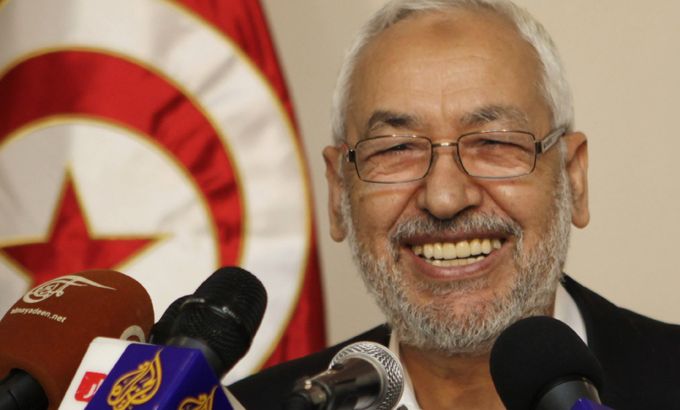
Rachid Ghannouchi: Re-imagining Tunisia
The leader of the Ennahda Party discusses the anti-Islam video, the role of Sharia and freedom of expression in Tunisia.
Tunisia is where it all began. The actions of one desperate man ignited a revolution at home, and inspired a tidal wave of change across the Arab world.
But two years after Mohamed Bouazizi set himself on fire, in what direction is Tunisia now heading?
Certainly there is more democracy: for the first time in more than four decades the people cast ballots in a free and fair process that installed a new president and a constituent assembly.
But negotiations to write a new constitution that will enshrine the country’s new values seem to be moving very slowly.
At issue are questions about the role of religion, the division of powers and the status of women – and at the heart of those debates is one man.
To many, Rachid Ghannouchi is still an uncertain quantity. An opponent of the old dictatorship – imprisoned, tortured and exiled for his views – a philosopher and progressive Muslim thinker.
Others fear his Ennahda or Renaissance Party, now the largest in the assembly, is a vanguard for the creeping Islamicisation of Tunisia, and that Ghannouchi himself is working for a new Islamic caliphate.
As riots were breaking out across the Arab world in response to an anti-Islam film trailer, Ghannouchi shared his views on the violent reaction: “It is very sad news for me because this event can give service only to anti-Islam … whoever plans this crime with the intention or without intention, they destroy the dialogue between Islam and the West, they help Islamophobia in the world.”
“Violence is not the solution it is part of the problem,” Ghannouchi told Talk to Jazeera. “We have many problems between Muslims and some Western countries, but violence is not the solution. It can increase the problems and difficulties and push things towards a war between nations and religions. It is not [part of] the Islamic politics.”
He also spoke about democracy, Islam and the future of Tunisia.
 | Talk to Al Jazeera can be seen each week at the following times GMT: Saturday: 0430; Sunday: 0830, 1930; and Monday: 1430. |