Kenya candidates clash in final debate
Presidential hopefuls engage in last TV debate before next week’s general election.
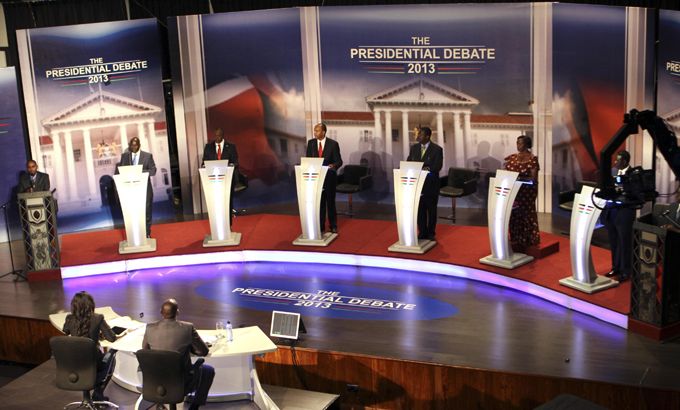
Kenya’s presidential candidates have faced off for a final time ahead of elections on March 4, with more than 14 million citizens registered to vote.
The debate on Monday focused mainly on education and health care. The current president Mwai Kibaki is not seeking re-election.
The top two contenders, who stood neck-and-neck in run-up polls, are prime minister Raila Odinga and Uhuru Kenyatta, the deputy premier who is also the son of Kenya’s first president as an independent nation.
Al Jazeera’s Mohamed Adow, reporting from Nairoibi, said that corruption was also a main issue in the debates.
“The gloves came off on the segment of the debate when the candidates were questioned on corruption,” he said.
“It seemed like each and every one of them had something to answer for, something in their past.”
It will be the first election since a disputed contest five years ago that sparked weeks of inter-tribal violence.
Kenyatta, one of the country’s richest men and a leader of the dominant Kikuyu tribe, chose to run for president despite facing trial at the International Criminal Court over allegations that he orchestrated revenge attacks against Odinga’s supporters after losing the 2007 election.
He faces charges of crimes against humanity, including murder, rape and persecution, over the violence that that left 1,200 dead.
There are fears that violence may return again in this election season.
The Kenya Red Cross says violence that killed more than 200 people and displaced nearly 120,000 across Kenya late last year had political overtones.