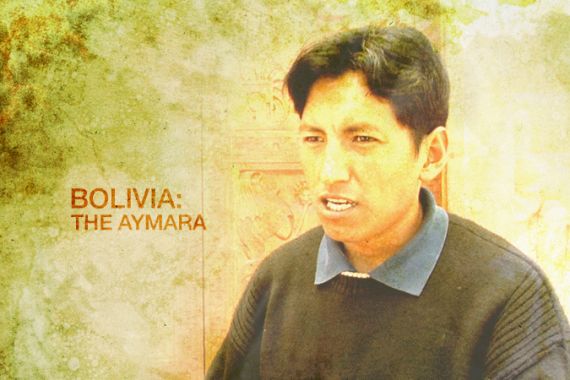
Bolivia: The Aymara
Previously untold stories are now being heard in Bolivia, often in languages once excluded from public discourse.
Editor’s note: This film is no longer available online.
The streets of the Bolivian capital La Paz have changed, as have the faces of power. Previously untold stories of colonisation and hardships are now being told, often in the form of colourful murals lining the main thoroughfares of the city.
Keep reading
list of 4 itemsEnergy summit seeks to curb cooking habits that kill millions every year
Thousands protest against Israel’s participation in Eurovision final
Israel qualifies for Eurovision final amid Gaza war protests
In Evo Morales the country has its first indigenous president and he has made promoting indigenous languages a part of his agenda. Indeed, 75 per cent of Bolivia’s population is indigenous. Still, many feel that speaking languages such as Aymara publicly signals low class and backwardness.
“When I’m on stage I see a bit of admiration from the public,” says musician Rufino Machaca Mamani. “But if I speak Aymara with my friends, they will discriminate. They think that I’m a peasant and an Indian.”
However, culture is the first step to changing perceptions of Aymara and other indigenous languages. A lot of modern music is now being made and sung with lyrics in languages previously excluded from the public discourse.
Aymara rapper Abraham Bohorquez says: “We do hip-hop, and at the same time we reclaim the cultural identity of our communities. Five years ago, many young people were ashamed of being Aymara or Quechua.”
In Bolivia, the movement for change from within is starting with pride.
Published On 17 Jul 2014