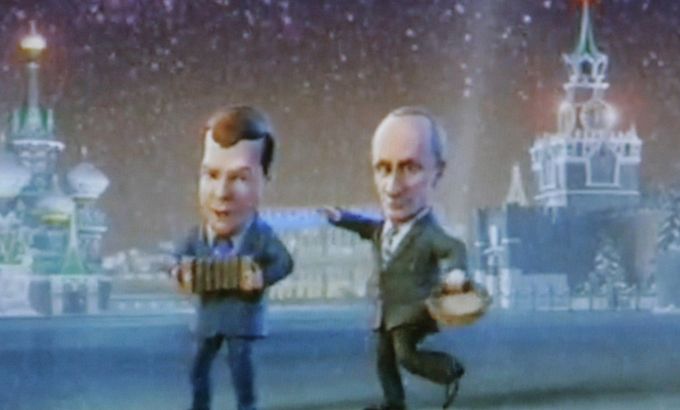
The resurgence of Russian satire
Thousands of Russians have tapped into the country’s rich tradition of political satire to express their discontent.
Russia has a rich history of political satire. There is not much that Russians really miss from the Soviet era, but the political jokes that were made at the communist government’s expense are certainly among them. With official discourse limited to the likes of Pravda and Izvestia back then, those silly little jokes were about as far as political dissent went.
One of the first things Vladimir Putin, the Russian president, did when he first came to power more than a decade ago was take control of a big chunk of the Russian media landscape. He has just won the presidency once again and with the mainstream media pretty much back under the Kremlin’s control, Russian political satire has been exiled to the world wide web.
In recent months, thousands of young, educated Russians have tapped into the country’s rich tradition of political satire to express their discontent.
With Russia’s more than 50 million internet users the Kremlin is facing a major media challenge from creative dissident minds making mischief and it is not sure how to deal with them.
The Listening Post’s Flo Phillips looks at resurgence of Russian satire and the wave of political parodies that are riding high on the web, from Siberia to St Petersburg.
“Since Putin announced that he wanted to be president again, political humor has skyrocketed, because how else can you deal with the situation, you can’t vote him out, so you joke about it.”
Luke Harding, author of Mafia State