Has springtime finally arrived in Sudan?
As anti-austerity demonstrations sweep across Khartoum, we ask if the spirit of the Arab Spring has reached Sudan.
Sudan’s government is facing public anger in response to its newly-announced austerity measures. Opposition forces reject the plan, and calls for a change of leadership are growing.
|
“The [government] has made the wrong decision and they have to suffer the consequences of this.“ – Ishag Osher Mekki, a human rights activist |
So, where will these protests lead and what could it mean for the already complicated situation in Sudan?
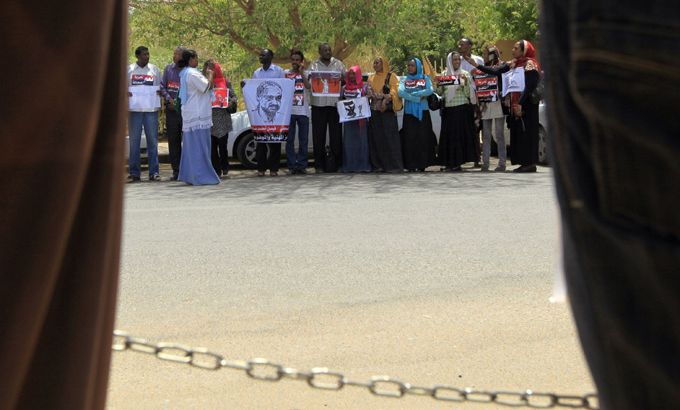
Protests are now in their sixth day in Sudan’s capital. Anti-austerity demonstrations have swept across Khartoum in response to government plans to cut jobs and raise fuel prices.
The protests have not always been peaceful; riot police have fired tear gas and civilians armed with machetes and swords have attacked protesters.
The protests began after Omar al-Bashir, the Sudanese president, announced the austerity measures earlier this week.
Sudan has been gripped by economic and political turmoil. Its rapidly deteriorating economy was made worse by South Sudan’s secession last year, when it lost 75 per cent of its oil revenues.
|
“This is not an Arab Spring …. The government in Sudan is a comparatively popular government.“ – David Hoile, the director of the Sudan Research Centre |
The price of fuel has gone up by 60 per cent since al-Bashir announced a decision to remove fuel subsidies.
Conflict in Darfur and South Kordofan continues to take a human as well as economic toll. And in the wake of this conflict, al-Bashir has become the first sitting head of state indicted by the International Criminal Court (ICC) for war crimes.
So, has Sudan caught the spirit of the so-called Arab Spring?
Joining Inside Story, with presenter Ghida Fakhry, to discuss this are guests: Ishag Osher Mekki, the secretary-general of Darfur Victims Organisation for Rehabilitation and Relief and a human rights activist, and David Hoile, the director of the Sudan Research Centre and author of Darfur: The Road to Peace.
THE STATE OF SUDAN:
- Protesters gathered to demand the resignation of the president
- The protests started on Saturday night at the University of Khartoum
- Protesters chanted “the people demand the downfall of the regime”
- Omar al-Bashir has ruled the country since 1989
- South Sudan declared its independence in 2011 after years of civil war
- Sudan’s economy is struggling – inflation reached 30.4 per cent in May
- Falling oil income has left Sudan with a $2.4bn budget deficit
- Rights groups say journalists in the country are being arrested without charge