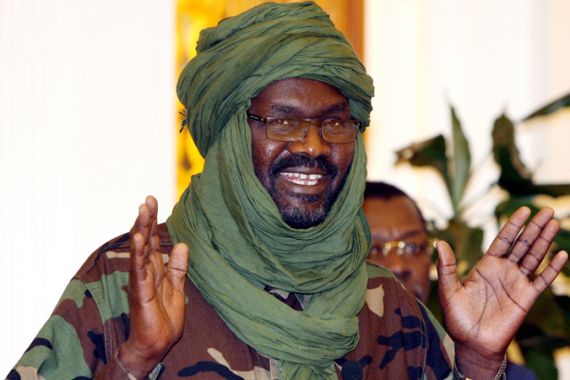
Darfur: A rebel leader’s death
Will the death of rebel leader Khalil Ibrahim help or hinder attempts to build lasting peace in Darfur?
Sudan’s Army spokesman has announced the death of Khalil Ibrahim, the head of the Justice and Equality Movement (JEM).
|
“The death of Khalil Ibrahim will represent the closing of the file of war between the government and the rebels.“ – Rabie Abdul Atti, National Congress Party |
The spokesman said Ibrahim was killed in fighting with Sudanese troops in the Wad Banda area of North Kordofan, while trying to cross the border into South Sudan. His death is being seen as a serious blow to Darfur’s most powerful rebel group.
Ibrahim, a member of the al-Zaghawa tribe which is dominant in Chad but a minority in the Darfur region, founded the Justice and Equality Movement in 2001.
|
“This does not conclude the struggle in Darfur because people do believe that their general grievances haven’t been addressed yet.“ – Ishag Meki, a Darfurian activist |
At one stage, he served in the government of Omar al-Bashir, the Sudanese president, but Bashir later became a sworn enemy.
And with the aim of unseating the president, Ibrahim built the movement with as many as 35,000 armed fighters.
Many observers describe JEM as the most significant force in the region, so what impact will his death have on rebel forces in Sudan and on the ongoing attempts to secure peace in Darfur?
Inside Story discusses with guests: Hafiz Mohammed, the director of Justice Africa Sudan; Ishag Meki, a Darfurian activist and secretary-general of the Darfurian victims Organisation for Rehabilitation & Relief; and Rabie Abdul Atti, a leader of the governing National Congress Party and an advisor to the ministry of information.