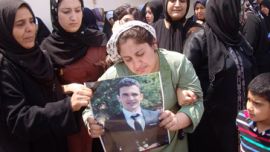
The murder of Sardasht Osman
Will the journalist’s killers escape justice and how would this impact the region?
The murder of Sardasht Osman, an English language student and aspiring journalist, has shocked Iraq and Kurdistan.
The body of the 23-year-old student was found in Mosul on May 6, two days after he was kidnapped outside the language department of Salahadin University in the nearby city of Arbil.
In his widely read articles he tackled corruption in the Kurdistan Regional Government (KRG), dared to mention President Massoud Barzani and his daughter and lamented the death of freedom in Iraqi Kurdistan.
He had repeatedly been threatened and warned to stop his investigative reporting critical of local politicians and security officials, but his courage and professionalism pushed him to continue.
The killing sparked questions and anger. Mass demonstrations followed, calling on security authorities to unveil the details about what happened to him. Accusing fingers have been pointed at the KRG’s intelligence services.
If no one can prove the murder, will Sardasht Osman’s killers escape justice? How does this incident impact the region and its stability?
Our guests this week are Hiwa Osman, the Iraq director of the Institute for War and Peace Reporting, and Houzan Mahmoud, the representative of the Organisation of Women’s Freedom in Iraq.
This episode of Inside Iraq can be seen from Friday, June 25, at the following times GMT: Friday: 1730, 2230; Saturday: 0300, 0830; Sunday: 0600, 1230; Monday: 0130.