Israel to release frozen Palestinian funds
PM says money owed to PA to be freed as Palestinians appeared to have suspended “unilateral moves” for UN recognition.

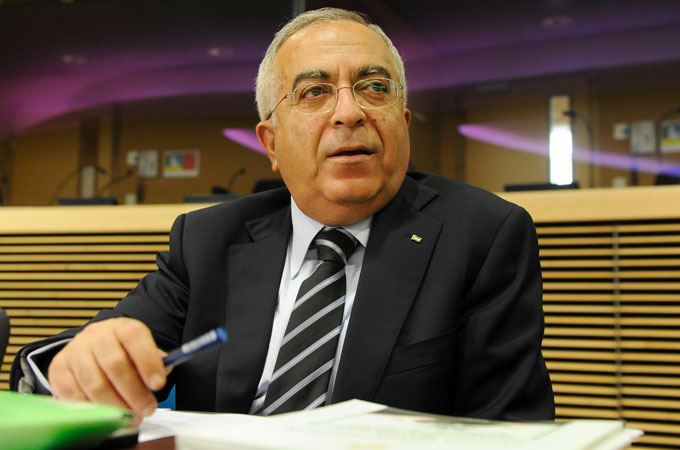 |
| Prime Minister Salam Fayyad said the Israeli punishment was causing heavy economic damage [File/Reuters] |
Israel has announced that it will release tens of millions of dollars of tax funds owed to the Palestinians, ending a standoff that the Palestinians say has caused grave damage to their fragile economy.
The move came following heavy pressure by the US, UN and Europe on Israel to free the money and was taken despite the opposition of the Israeli Foreign minister Avigdor Liberman.
Al Jazeera’s Tony Birtley, reporting from Jerusalem, said that Lieberman had earlier threatened to bring down the government over the decision to release the money.
“The feel the unity talks between Hamas and Fatah are not going anywhere and the Palestinians have not perused their efforts to get full recognition at the United Nations. So after intense debate they decided to release the money.”
Israel collects the tax funds for the Palestinians and transfers the money each month, but froze this month’s transfer to punish the Palestinians for their efforts to win UN recognition of their independence.
The Israeli decision came after the Palestinians were accepted to the UN cultural agency UNESCO – part of a broader effort for admission as a full member state at the UN.
Israel accuses the Palestinians of trying to bypass peace talks through the campaign. It says that a Palestinian state can be established only through a negotiated peace deal.
Since the UNESCO victory, the Palestinian campaign at the UN has stalled due to deadlock in the Security Council, which must approve full membership.
Palestinian officials have not yet decided how to proceed.
Prime Minister Benjamin Netanyahu’s office said he decided to release the money because the Palestinians appear to have suspended their “unilateral moves”.
It said the decision would be “reassessed” if the Palestinians resume these steps.
Economic damage
The tax funds come from customs duties and other fees that Israel collects on behalf of the Palestinians under past interim peace deals.
The money is essential for the Palestinian government, the largest single employer in the Palestinian territories, to pay tens of thousands of workers, as well as security forces that co-operate with Israel in halting attacks by armed groups on Israelis.
Palestinian Authority (PA) Prime Minister Salam Fayyad had warned he would be unable to pay upcoming salaries and said the Israeli punishment was causing heavy economic damage.
Donor nations and even Israeli security officials had urged Netanyahu to release the money, saying cash shortfalls destabilise the limited self-rule government in the West Bank.
PA spokesman Ghassan Khatib said there would be no comment until the money has been transferred. He said the Palestinian government had not yet been informed by Israel of the decision to release the funds.
Israeli-Palestinian peace talks have been stalled for three years. The Palestinians say they will not resume negotiations unless Israel halts settlement construction in the West Bank and East Jerusalem – captured territories where the Palestinians hope to establish an independent state.
Israel says talks should resume without preconditions.