Kuwait’s emir accepts cabinet’s resignation
Cabinet quit after parliament had asked to quiz three ministers belonging to the ruling al-Sabah family.
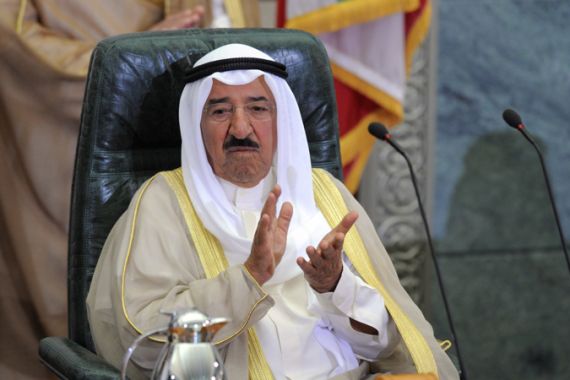
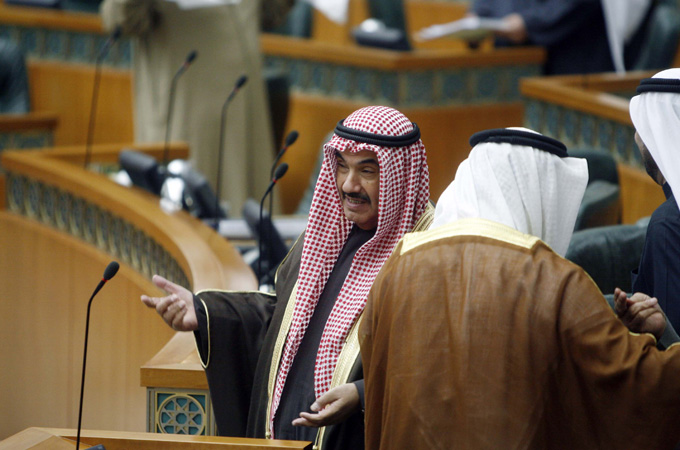 |
| Sources said they expected the emir to reappoint prime minister Sheikh Nasser al-Mohammad al-Sabah [AFP] |
Sheikh Sabah al-Ahmad al-Sabah, Kuwait’s emir, has accepted the resignation of the Gulf Arab state’s cabinet, the state news agency KUNA has said.
The cabinet resigned on Thursday to avoid the questioning by parliament of three ministers, all members of
the ruling al-Sabah family, amid calls for political and economic reform.
“His excellency the emir of the country accepts the resignation of the government,” KUNA said.
Kuwait’s parliament, the most outspoken in a Gulf region mostly dominated by autocratic rulers, has triggered numerous cabinet resignations or reshuffles through questionings.
Sources said on Wednesday that they expected the emir to reappoint Sheikh Nasser al-Mohammad al-Sabah, the prime minister, to form another cabinet.
While tough questioning of ministers is an everyday occurrence in most parliaments in the world, in Kuwait the
questioning is more akin to a direct challenge to the individual and an indirect challenge to the ruler, who has the last say in politics.