Nato split over Ukraine and Georgia
Foreign ministers unlikely to offer former Soviet states roadmap to membership.
Alternative bodies
The Map has been the penultimate membership port of call for candidates since 1999, but it is not a condition for accession, and Washington and its allies believe reform itself is more important than the body under which it happens.
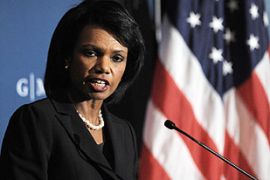
Condoleezza Rice, the US secretary of state, who is taking part in her last Nato meeting, leads a group of allies who believe that the Nato-Georgia commission and Nato-Ukraine commission are the best forums under which reforms can take place.
Arriving for the talks at Nato’s headquarters in the Belgian capital, Franco Frattini, Italy’s foreign minister, said: “We have now two new instruments that are the new commissions. If we decide through the two newly established commissions it is much better than insisting on Map, where there are some disagreements.
“The first point is to avoid in any case disagreements and divisions among our membership, otherwise we would give a very bad message to the outside world.”
One European Nato diplomat, who wished to remain anonymous, described the two commissions as “very useful vehicles for taking this forward”.
Meanwhile, David Miliband, the British foreign secretary, said Georgia and Ukraine “want practical help”.
“They know that the immediate issue is actually not a decision today on membership,” he said.
“The issue today is a decision on how we help those countries upgrade and develop their own armed forces so that they are able to be a positive presence and a positive force for stability.”
Russian relations
However, Germany and France lead a bloc of half a dozen European allies taking an increasingly tougher line against the entry of Georgia and Ukraine.
A key factor is Nato’s relations with Russia, which deteriorated badly after the war, but are now steadily improving.
Ministers will discuss whether high-level meetings with Moscow, which were frozen over the conflict, can now resume.
The Europeans are particularly keen to foster better ties with Moscow, given its dominant role in providing energy to the continent, and are wary of the US tactic to try to by-pass the Map process.
A member of one European delegation, who wished to remain anonymous, said: “Half the motivation of the United States is to punish Russia.”
On Monday, a German government spokesman underlined that while Russia should have no veto over their hopes, Nato leaders had pledged in April that the accession of new members “would indeed be co-ordinated with Russia”.