Serbia offered EU co-operation deal
Move comes as Serbs choose between pro-Western president and pro-Russian rival.
Published On 3 Feb 2008
Instead they agreed, after hours of debate, to sign an interim political agreement on co-operation covering free trade, visa liberalisation and educational exchanges.
EU denial
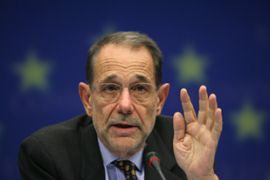
Javier Solana, the EU foreign policy chief, has denied charges that the bloc was interfering in the election.
“This is a text that will open up doors for Serbia to the EU,” Dimitrij Rupel, Slovenia’s foreign minister, told a news conference after chairing the meeting.
Slovenia holds the EU presidency at present.
Rupel said it was natural for the EU, which was built on “the negation of nationalism”, to oppose nationalists in the Balkans.
The leaders of Kosovo’s ethnic Albanian majority, who make up 90 per cent of the province’s two million people, say they are within weeks of declaring independence from Serbia.
Real choice
Olli Rehn, the EU enlargement commissioner, said an interim deal on trade and travel should make the prospect of EU membership “real and tangible.
He said: “There’s much at stake in Serbia in these days.
“The Serbian people are choosing between a nationalist past and a European future … I trust the Serbian people will choose and indeed embrace their European future.”
Vuk Jeremic, Serbia’s pro-Western foreign minister, welcomed the offer when he met EU ministers just after the agreement.
Source: News Agencies