Pakistan ‘terror’ crackdown urged
India calls for action against armed groups in Pakistan as it presents Mumbai dossier.
‘Inappropriate’ response
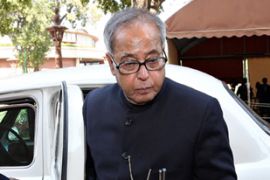
Mukherjee told the Indian parliament “prevarication, denial, diversionary tactics and misplaced sense of victimhood … characterised Pakistan’s reaction from early days after the Mumbai attack.
| In depth |
|
Global outrage over attacks Media reacts to Mumbai mayhem Pakistan-India relations in focus |
“… the overwhelming response of official Pakistan to the Mumbai attack was not appropriate to a terrorist attack where innocents were massacred in cold blood.”
India has consistently accused Pakistan of not doing enough to arrest those responsible for the raid.
Rehman Malik, Pakistan’s interior ministry chief, said a day earlier: “Some part of the conspiracy has taken place in Pakistan and … according to the available information, most of [the conspirators] are in our custody.”
He said a criminal case had been lodged against six men held in custody and two others still at large on charges of “abetting, conspiracy and facilitation” of a “terrorist act”.
Malik said police had traced a boat engine used by the attackers to Pakistan and infiltrated two hideouts of the suspected attackers in the country.
Al Jazeera’s correspondent Kamal Hyder said Pakistan has put dozens of questions about the raid to India and asked for DNA samples of Mohammad Ajmal Kasab, the sole Mumbai attack suspect caught alive by Indian officials.
“They want Kasab to be brought to Pakistan for a trial, although there is no extradition treaty between the two countries,” he said.
Lashkar blamed
Ravi Sawnhey, a security analyst and former head of India’s military intelligence, said that Pakistan’s admission should have come earlier.
“It has come after a lot of pressure from the international community. I would suspect that Pakistan has done this to prepare for the visit of [Richard Holbrooke] the US special representative [to Pakistan and Afghanistan],” he told Al Jazeera.
 |
| Mumbai was left devastated by the co-ordinated bomb and gun attacks [AFP] |
“In any case, it is a positive development and hopefully this will be followed up by sincere action.”
India has blamed the Mumbai attacks on Lashkar-e-Taiba, a group which says it is fighting against New Delhi’s rule over Indian Kashmir.
Islamabad has been under pressure from India and major world powers to crack down on the Lashkar, which Pervez Musharraf, the former president of Pakistan, banned in January 2002.
New Delhi says all 10 armed men involved in the Mumbai attack were Pakistanis.
It also says that the men’s handlers in Pakistan had kept up communication by phone during the three-day assault on luxury hotels, a railway station and a Jewish community centre.
Improved confidence
Prem Shankar Jha, a former adviser to the Indian prime minister, said that the Indian government has promised it will aid Islamabad’s investigation into the Mumbai attacks by giving all the information it has on the incident.
“A certain level of confidence has been built up,” he told Al Jazeera.
“Don’t forget that [at one point] India was [not keen] to even hand over the dossier. Only 13 pages of the dossier were given to Pakistan directly, the rest of the evidence went through the Americans and the British.
“That showed not only a high level of anger [on India’s part] but a high level of mistrust. That stage has now passed.”