Student riots spread in Bangladesh
Violence goes on despite official apology and closure of army camp at Dhaka campus.
Published On 22 Aug 2007
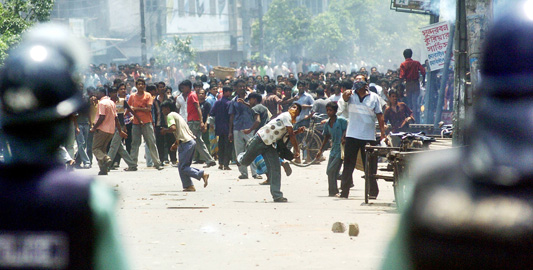 |
| Riots have spread from the capital to other towns in Bangladesh [AFP] |
At least 50 people have been injured in Bangladesh as a violent student protest, that began at Dhaka University, spread across the capital and the country.
The clashes with police continued on Wednesday despite an apology from the interim government and the closure of an army camp at the university gymnasium, one of the sutdent demands.
Keep reading
list of 4 items‘I blame the government’: Poor Kenyans say no support amid record flooding
‘We need you’: Solomon Islands’ support for US agency’s return revealed
‘Triple spending’: Zimbabweans bear cost of changing to new ZiG currency
In the capital, students from half a dozen colleges and universities took to the streets in support of their colleagues at the Dhaka campus, the largest in the country who boycotted lectures for the third consecutive day.
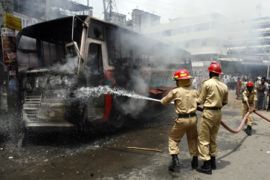
At least six vehicles were burned and similar clashes with police were reported in the northwestern town of Rajshahi, the southern coastal town of Barisal and several other places.
At least 50 people were injured in the fighting at Rajshahi university and at a college in Khulna city in the southwest, witnesses said.
“The situation is deteriorating as teachers now have came out to join protesting students,” said a police officer in Dhaka.
The violence has shut shops, forced public transport off the streets and caused panic among residents in affected areas, witnesses said.
The Bangladeshi army had begun to withdraw troops from the camp at the Dhaka University gymnasium after fighting on Tuesday left at least 150 students injured.
Soldiers had been stationed in the university’s gymnasium since they were deployed there in January by the military-backed interim administration following months of political violence.
Restrictions
The government issued an apology over the incident and confirmed the troop withdrawal had begun late on Tuesday. Students, fed up with the army presence, had begun rioting on Monday.
Police used tear gas and rubber bullets to try and disperse the students who responded by throwing stones and wielding sticks.
A statement from the information ministry issued on Tuesday evening said: “The interim government deeply apologised for the incident and ordered immediate withdrawal of the army camp from the campus and an inquiry into the unfortunate incident.”
Jubilant students chanted “victory, victory” and lit candles to celebrate as troops began their departure preparations, but were subsequently told to calm down by the university’s acting vice-chancellor, AFM Yusuf Haider.
Similar clashes the previous night injured more than 100 people. The violence started when students began protesting against the presence of army troops during a football match at what is the country’s largest university.
Protests and street assemblies have been banned in Bangladesh since the interim government took power on January 12 under a state of emergency.
Monday’s fighting was the first major defiance of the restrictions and spread across campus after troops reportedly assaulted several students.
The interim administration has said it will crack down on political corruption before holding an election late next year.
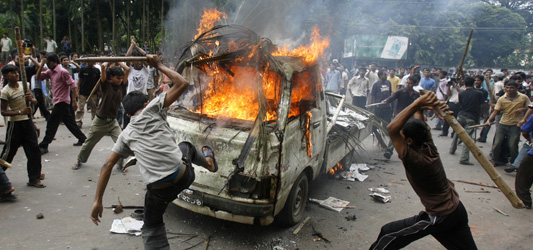 |
| The violence was the first major defiance of emergency laws imposed in January [Reuters] |
Source: News Agencies