Argentina workers strike to demand tax cuts
Thousands take to streets in Buenos Aires to call for greater income tax exemptions amid nation’s spiralling inflation.
Published On 28 Jun 2012
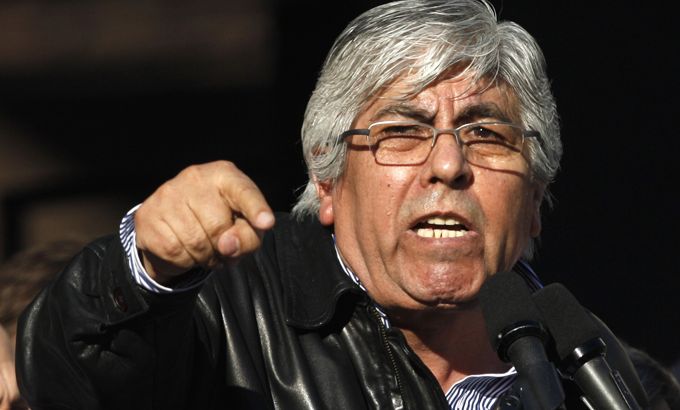
Thousands of striking truckers and union members have gathered in front of the presidential palace in the Argentine capital to demand tax cuts, in a one-day work stoppage seen as a challenge to the rule of President Cristina Fernandez Kirchner.
The strike in Buenos Aires on Wednesday was called by Hugo Moyano, the head of the powerful General Labour Confederation Union, which was once a close ally of Kirchner and her late husband, former president Nestor Kirchner.
Keep reading
list of 4 itemsRussia’s Putin eyes greater support from China for Ukraine war effort
India-Iran port deal: A gateway to Central Asia or a geostrategic headache?
India’s income inequality widens, should wealth be redistributed?
Al Jazeera’s Teresa Bo, reporting from the site of the demonstration in Buenos Aires, said that the scale of the protest was “massive”.
Moyano’s support helped Cristina Kirchner win re-election in October last year.
Their relationship, however, has soured in recent months, and the ongoing political confrontation culminated in the strike, the first time the labour federation, an umbrella group for numerous unions, has called a strike since Nestor Kirchner took office in 2003.
“It wouldn’t cost Mrs President anything to … talk to workers,” Moyano told his supporters at the rally in Buenos Aires. He added that he hoped Kirchner would “realise that she can’t continue with this overwhelming haughtiness”.
Limited effect
Despite the impressive crowd that streamed into the Plaza de Mayo, the effect of the strike was limited. Public transit workers, including bus and taxi drivers, for example, did not take part, meaning that traffic in Buenos Aires and other cities was largely unaffected.
President Kirchner was not in the capital on Wednesday. She was traveling to a village in central San Luis province to inaugurate a pig-rearing facility.
She has repeatedly asked unionists to rein in their demands during a global financial crisis that has badly hit the Argentine economy.
On Wednesday, she called on Argentines to be “united, organised and show solidarity”.
In a nationally televised speech on Tuesday, the president urged unionised workers to acknowledge the benefits they have received as a result of an economic boom that has swelled union ranks and reduced unemployment to about seven per cent.
She said that less than 20 per cent of the workforce currently paid income tax, and rejected the unions’ demand that more people be made exempt from paying income tax.
Fuel shortage
In addition to truckers, who union officials say took part in the strike almost unanimously, garbage collectors, newspaper and food distributors, some rural workers, as well as employees of the health and textile sectors did not show up for work.
Moyano and the strikers are demanding the state cut back income taxes to improve wages amid inflation, which private analysts estimate at about 25 per cent a year. They are also demanding better treatment from the executive branch.
Moyano is running for re-election as head of the labour federation this year.
Last week the truckers’ union flexed its muscles by staging a two-day fuel transport strike, causing shortages and drawing an angry response from the government.
Source: Al Jazeera, News Agencies