Mali prime minister forms new government
Interim cabinet consists of nonpolitical experts, including women, and soldiers seen as close to group that staged coup.
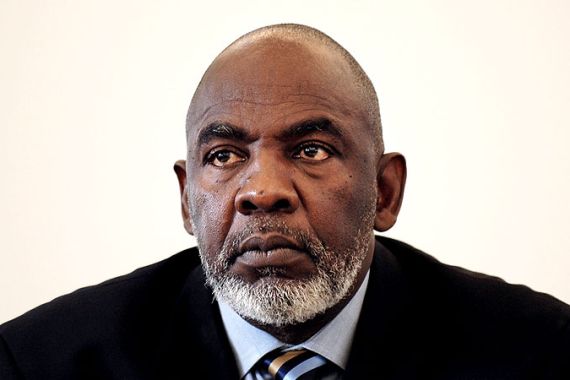
Mali’s new prime minister has formed an interim government with three army representatives seen as close to military leaders who overthrew a democratically elected government last month.
Prime Minister Cheick Modibo Diarra’s cabinet, unveiled on Wednesday, will have 24 members in addition to the army representatives.
The officers include Colonel Yamoussa Camara, Colonel Moussa Sinko Coulibaly and General Tiefing Konate, who will hold the defence, interior and civil protection portfolios respectively.
The formation of the government came days after former president Amadou Toumani Toure, who was ousted and then resigned when the coup leaders were forced to restore civilian rule, arrived in neighbouring Senegal with his family.
Toure, who had only months left before completing his second and last term, had sought refuge at the Senegalese embassy in the capital Bamako shortly after being toppled.
The interim government’s main task will be to resolve the crisis in the north of the country, where Tuareg and hardline Islamic rebels seized major towns in the chaos that followed the coup.
The 60-year-old Diarra said on April 20 in his first speech to the nation as prime minister that he was prepared to negotiate with the rebel groups but not under duress.
Diarra, a former chairman of Microsoft for Africa, named experts with little politcal experience, including three women, to his cabinet.
Upcoming elections
The new foreign minister, Sadio Lamine Sow, is a former close aide of Blaise Compaore, president of Burkina Faso, and has lived in the Burkina capital Ouagadougou for several years.
Campaore played a leading role in mediating the Mali crisis and in winning the release of Western hostages seized by Islamic groups in the region.
Tiena Coulibaly was appointed minister of the economy, finance and the budget. Mamadou Namory Traore assumed the position of minister of civil service and political reforms.
The new transition government will also help organise elections although a date has not been specified.
The coup led to the cancellation of the April 29 presidential election.
The establishment of the government came after a series of arrests last week of people considered close to the former president, including former prime minister Modibo Sidibe. Most have since been released.
Led by Captain Amadou Sanogo, junior army officers toppled Toure’s government citing his failure to rein in the insurrection in the north.
The junta stepped aside amid pressure from regional countries that threatened to impose sanctions.