Guinea prime minister empowered
President transfers some of his powers to still-to-be-named prime minister.
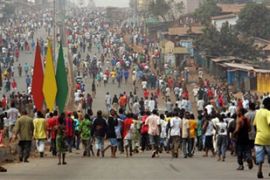
Although the prime minister’s powers and responsibilites have been outlined by Conte, he is still to announce who will take up the position.
The unions suspended their strike late on Saturday after the president agreed to the new appointment.
Agreement
The agreement was signed by the head of the Supreme Court and the National Assembly as well as union leaders and a representative of business leaders, but had not yet been given Conte’s official seal of approval.
During the industrial action protesters clashed with police and soldiers. The most violent day of the strike was January 22, when thousands of demonstrators from the suburbs were prevented from marching on the administrative heart of the capital, Conakry, by security forces who opened fire on the crowds.
The official government death toll from the two-week strike is 35 dead and 150 injured but rights campaigners say it is much higher. Conakry’s main hospital morgue registered 33 deaths from gunshot wounds on January 22 alone.