US in fish-and-chips row
The United States sparked a fish-and-chips trade row with two Asian nations on Wednesday, threatening punitive tariffs against Vietnamese fillets and South Korean microchips.

In simultaneous decisions, the Department of Commerce found Vietnam was dumping produce on the US catfish market, and South Korea was exporting unfairly subsidized semiconductors.
On the fish front, the Department of Commerce made a “final determination” that Vietnamese exporters had “dumped” the offending fillets on the US market – meaning they were sold at less than the cost of production, or below the price at home.
If the quasi-judicial US International Trade Commission (ITC) finds that the US catfish industry has been hurt as a result, Washington may order antidumping tariffs of up to 64%, as soon as 7 August. US catfish farmers lodged complaints a year ago.
The United States, responding to these complaints, has deemed that the Vietnamese fish are not really catfish at all. It refers to the Vietnamese produce, instead, as frozen “basa” and “tra” fillets.
Vietnam angrily denied the charges and accused the United States of protectionism. It says its exports to the US catfish market are low-priced because Vietnamese producers are able to breed the moustached fish far more cheaply than US farmers.
The dispute is the first major test of a US-Vietnam trade pact, which prised open the country’s markets and slashed tariffs on its exports to the US in December 2001.
Korean semiconductor ruling
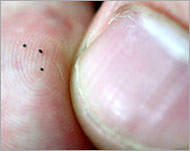 |
| Today’s semiconductor market is fiercely competitive |
As for the chips, the Department of Commerce found South Korea was selling unfairly subsidized semiconductors from 1 January 2001, until the end of June 2002.
South Korea’s Hynix, a major manufacturer of dynamic random access memory semiconductors (DRAMs), accused Washington of acting illegally. Chief Executive E J Woo, said the US decision to set punitive subsidy margins on the DRAMS was an “outrageous act aimed at a hidden agenda.”
The final ruling opens the way to retroactive duties of 44.71% against Hynix Semiconductor, 0.04% against Samsung Electronics and 44.71% against all other South Korean DRAM exporters.
The duties would be slapped on the South Korean DRAMS manufacturers only if the quasi-judicial ITC decides the imports harm or threaten US industry. An ITC decision is expected 31 July, leading to a possible order for duties 7 August.
Woo says the US Department of Commerce wrongly concluded that the South Korean government had been secretly involved in the financial restructuring of Hynix because Seoul owned shares in some South Korean banks.
The decision ignored the leading role of Citibank in the Hynix restructuring, he said.
Woo accused the department of seeking to pressure the South Korean government over economic restructuring.
“Freed from political pressure and hidden agendas, the [Department of Commerce’s] determination cannot survive court or World Trade Organization scrutiny,” he added.