Skip linksSkip to Content
play
Live
Navigation menu
  • News
    • Africa
    • Asia
    • US & Canada
    • Latin America
    • Europe
    • Asia Pacific
  • Middle East
  • Explained
  • Opinion
  • Sport
  • Video
    • Features
    • Economy
    • Human Rights
    • Climate Crisis
    • Investigations
    • Interactives
    • In Pictures
    • Science & Technology
    • Podcasts
    • Travel
play
Live

In Pictures

Gallery|In Pictures

The Berlin Airlift and the new Cold War

Stalin’s decision to blockade West Berlin was a defining moment of the Cold War that reverberates to this day.
The Berlin Airlift and the new Cold War

By Danylo Hawaleshka

Published On 26 Jun 202326 Jun 2023

Share

facebooktwitterwhatsappcopylink

Save

History Illustrated is a weekly series of insightful perspectives that puts news events and current affairs into historical context using graphics generated with artificial intelligence.

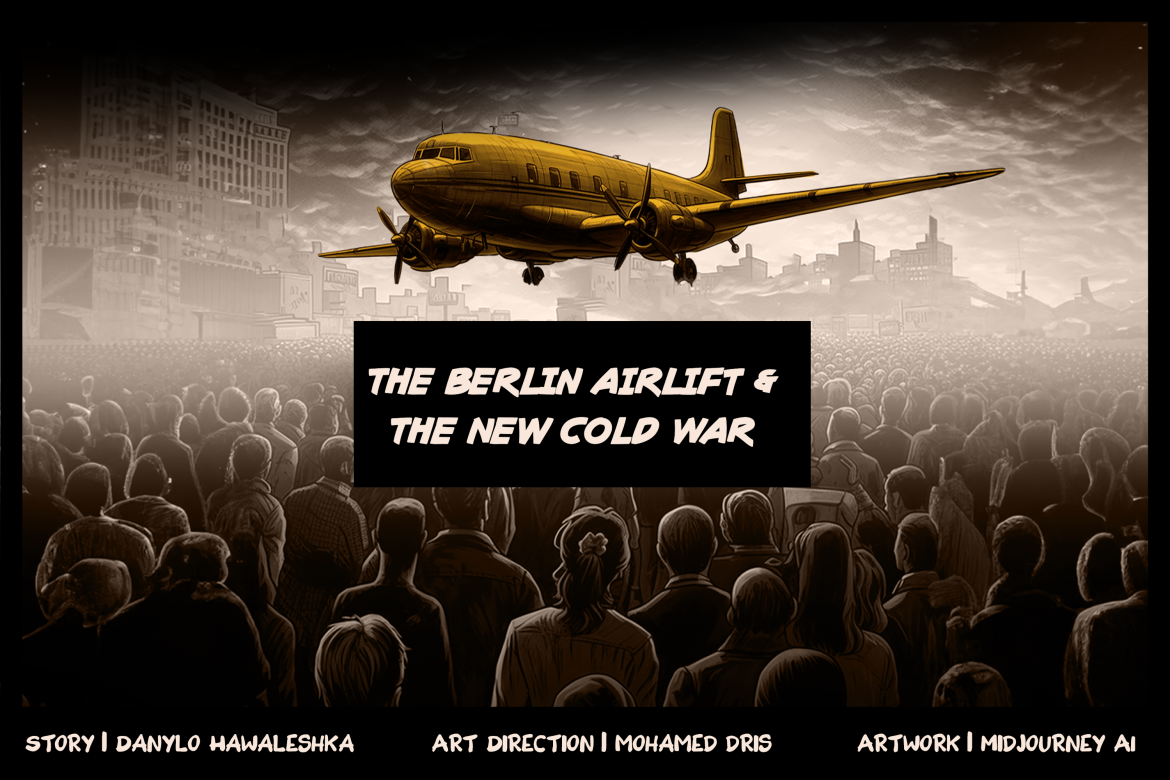
The Berlin Airlift began on June 26, 1948, and has been called the first major battle of the Cold War between the United States and the Soviet Union.
Advertisement
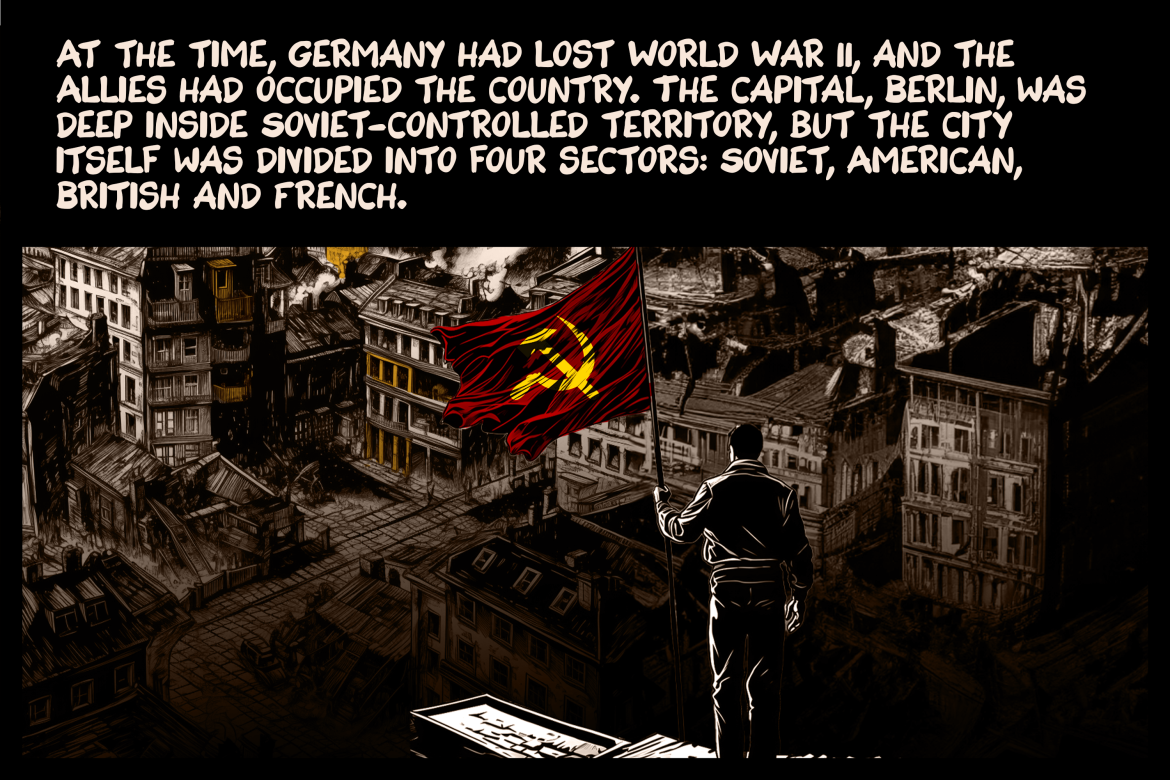
At the time, Germany had lost World War II, and the Allies had occupied the country. The capital, Berlin, was deep inside Soviet-controlled territory, but the city itself was divided into four sectors: Soviet, American, British and French.
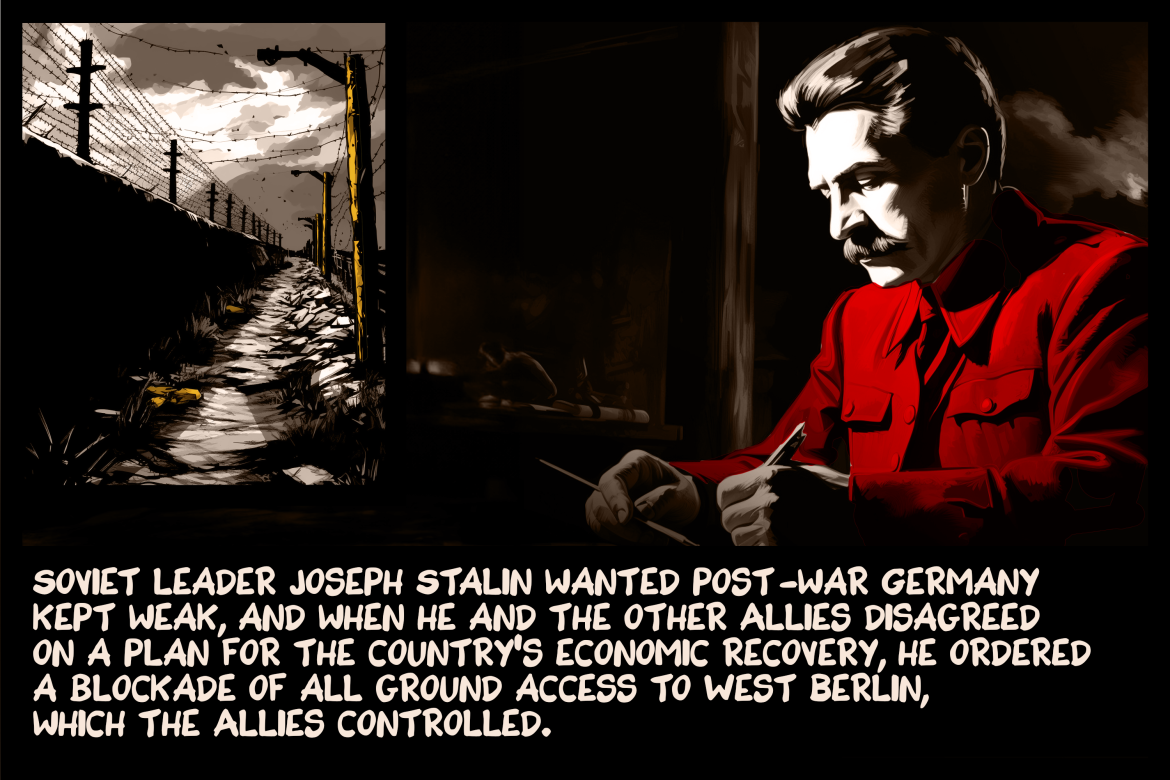
Soviet leader Joseph Stalin wanted post-war Germany kept weak, and when he and the other Allies disagreed on a plan for the country’s economic recovery, he ordered a blockade of all ground access to West Berlin, which the Allies controlled.
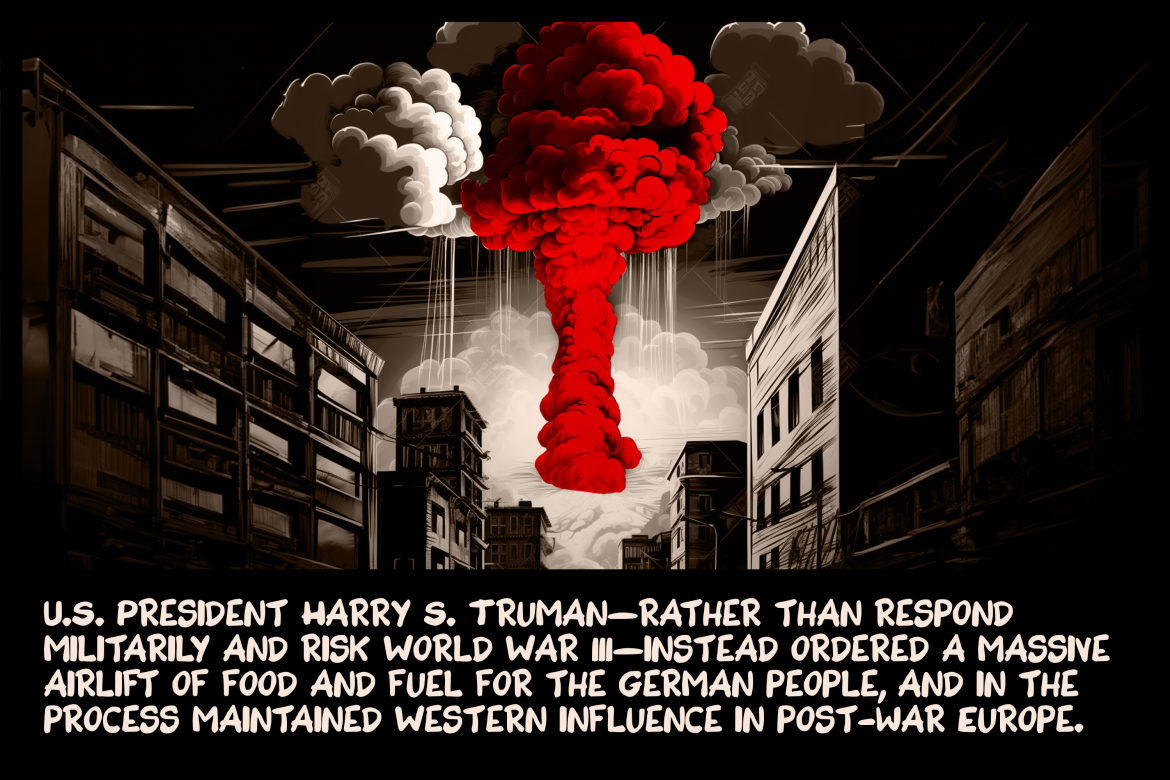
U.S. President Harry S. Truman—rather than respond militarily and risk World War III—instead ordered a massive airlift of food and fuel for the German people, and in the process maintained Western influence in post-war Europe.
At its peak, the airlift was responsible for an Allied cargo plane landing at Tempelhof Airport every 45 seconds. It was deemed a major humanitarian and political success.
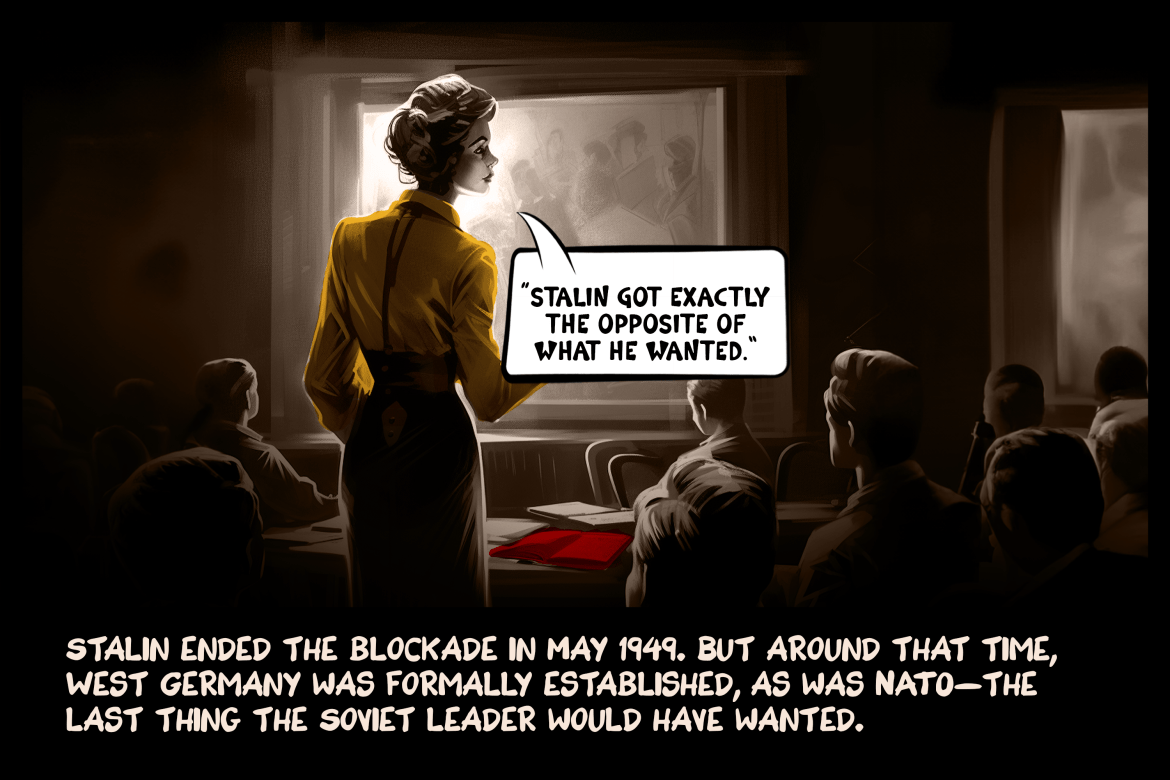
Stalin ended the blockade in May 1949. But around that time, West Germany was formally established, as was NATO—the last thing the Soviet leader would have wanted.
Advertisement
By 1961, the Soviets had had enough of East Germans escaping to seek a better life in West Berlin, so they built the Berlin Wall to surround that part of the city. The most famous symbol of the Cold War would stand for almost 30 years.
Today, when people talk about a Cold War 2.0, they usually mean the one between the United States and China, but the Russia-Ukraine war means Russia is, once again, very much a part of the conversation.
The cold war would eventually end in 1991, when communist hardliners staged a coup attempt that failed, and led to the collapse of the Soviet Union before the year was out.
Today, when people talk about a Cold War 2.0, they usually mean the one between the United States and China, but the Russia-Ukraine war means Russia is, once again, very much a part of the conversation.


  • About

    • About Us
    • Code of Ethics
    • Terms and Conditions
    • EU/EEA Regulatory Notice
    • Privacy Policy
    • Cookie Policy
    • Cookie Preferences
    • Accessibility Statement
    • Sitemap
    • Work for us
  • Connect

    • Contact Us
    • User Accounts Help
    • Advertise with us
    • Stay Connected
    • Newsletters
    • Channel Finder
    • TV Schedule
    • Podcasts
    • Submit a Tip
  • Our Channels

    • Al Jazeera Arabic
    • Al Jazeera English
    • Al Jazeera Investigative Unit
    • Al Jazeera Mubasher
    • Al Jazeera Documentary
    • Al Jazeera Balkans
    • AJ+
  • Our Network

    • Al Jazeera Centre for Studies
    • Al Jazeera Media Institute
    • Learn Arabic
    • Al Jazeera Centre for Public Liberties & Human Rights
    • Al Jazeera Forum
    • Al Jazeera Hotel Partners

Follow Al Jazeera English:

  • facebook
  • twitter
  • youtube
  • instagram-colored-outline
  • rss
Al Jazeera Media Network logo
© 2025 Al Jazeera Media Network