Skip linksSkip to Content
play
Live
Navigation menu
  • News
    • Africa
    • Asia
    • US & Canada
    • Latin America
    • Europe
    • Asia Pacific
  • Middle East
  • Explained
  • Opinion
  • Sport
  • Video
    • Features
    • Economy
    • Human Rights
    • Climate Crisis
    • Investigations
    • Interactives
    • In Pictures
    • Science & Technology
    • Podcasts
    • Travel
play
Live

In Pictures

Gallery|Coronavirus pandemic

In Pictures: Kashmir’s elaborate weddings muted by COVID-19

The pandemic has dampened the traditional wedding rituals and cutdown in week-long feasting.
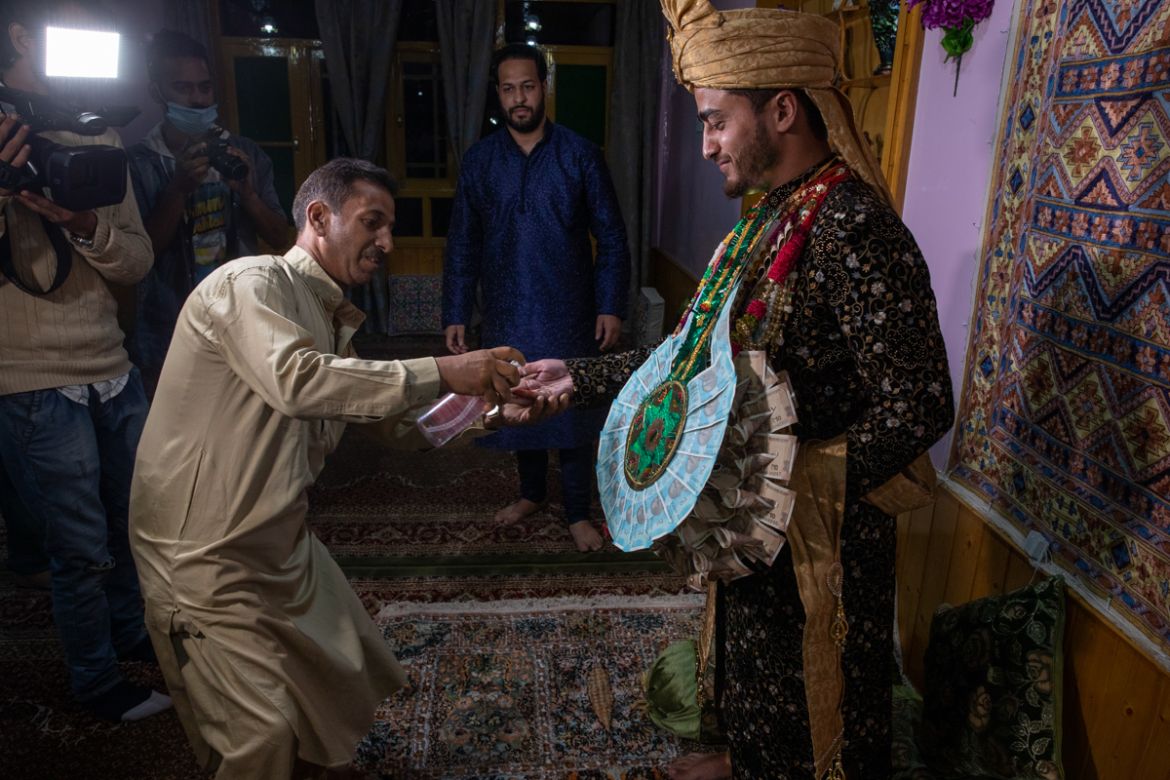
A Kashmiri man sprays sanitizer on the hand of Haseeb Mushtaq, a Kashmiri groom as he arrives at brides home during his wedding ceremony on the outskirts of Srinagar, Indian controlled Kashmir, Monday
Kashmiri groom Haseeb Mushtaq is greeted with an offer of some hand sanitiser as he arrives at his bride's home on the outskirts of Srinagar for their wedding ceremony. [Dar Yasin/AP Photo]
Published On 22 Sep 202022 Sep 2020

Share

facebooktwitterwhatsappcopylink

Save

Within months, the centuries-old, lavish marriage tradition for which Indian-administered Kashmir is known has changed drastically in a region that already suffered months-long security lockdown last year.

The three days of feasting, elaborate rituals and huge gatherings have been replaced by muted ceremonies attended by a limited number of close relatives and neighbours.

Months before the pandemic, Haseeb Mushtaq had drawn up a guest list of hundreds of guests and made grand plans for celebrating his wedding in May.

But then the pandemic prevented him from going back home for his wedding from Dubai, where he has an engineering job. When he finally arrived for his postponed wedding in September, he was only able to invite about 100 people, mostly from his extended family and close friends.

“Marriage is a once-in-a-lifetime affair and I feel really bad that we couldn’t invite most of our relatives, friends and neighbours,” Haseeb said at the ceremony. 

Still, Haseeb considers himself lucky. One of his friends, who works in Saudi Arabia, was unable to travel home for his own marriage and had to postpone it to next year.

Kashmiris normally hold elaborate marriage feasts, with meals cooked over open fires through the night by teams of chefs called Wazas. Hundreds of guests are invited for lunch and dinner and served up to 30-course meals. The feast is called a Wazwan.

The peculiarity of a Wazwan is that every part of a lamb, except the hide, head and hooves, is used to make different dishes.

Advertisement

In the past, guests would gather in groups of four around large copper platters heaped with rice and various mutton and chicken dishes. The Wazas move among the guests, dressed in crisp white baggy trousers and tunics, serving more food.

The Wazwan tradition is so entrenched across all classes in Kashmir that numerous attempts by social groups and the government to raise awareness around food waste have failed to result in any significant restraint.

The pandemic has largely achieved that in a matter of months.

Wedding ceremonies require prior permission from the authorities, and limits on the number of guests and physical distancing rules are mandatory. Most Wazwans are restricted to 10 dishes and the chefs are advised to wear protective suits and gloves.

Health officials say 63,990 coronavirus cases have been reported in the region through September 20, including 1,001 deaths.

For master chef Ghulam Qadir and his team of over three dozen cooks, the pandemic has impacted their earnings badly for the second straight year.

Last August, India suddenly scrapped disputed Kashmir’s statehood and imposed an unprecedented security clampdown, creating economic disaster and the cancellation of most wedding celebrations.

Qadir said the pandemic has posed another challenge to the cooks – keeping themselves and guests safe while cooking and serving the marriage feasts.

“It is sad to see our hundreds of years of tradition changing in few months due to the pandemic. We used to eat from one big platter and now we have a small plate for each guest,” Bashir Ahmed said at a relative’s wedding.

“It looks like a small change, but this kind of change saddens me.”

Relatives and neighbors of Kashmiri groom Haseeb Mushtaq, sing during henna ceremony of his wedding in Srinagar, Indian controlled Kashmir, Sunday, Sept. 13, 2020. The coronavirus pandemic has changed
Haseeb Mushtaq's relatives, friends and neighbours sing during the henna ceremony for his wedding. [Dar Yasin/AP Photo]
Advertisement
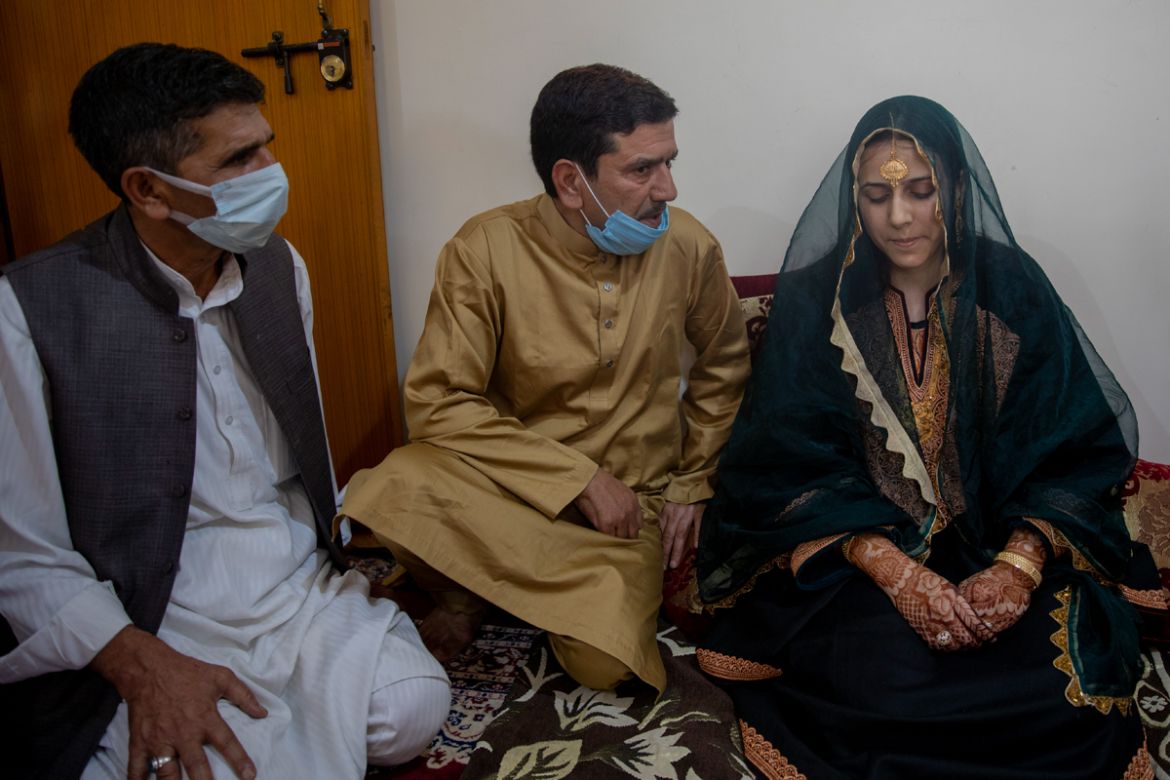
Fayaz Ahmed, center and Manor Ahmed, left, uncles of Kashmiri bride Saima Ashraf, ask her permission before Nikah ceremony during a wedding on the outskirts of Srinagar, Indian controlled Kashmir, Thu
Manzor Ahmed, left, and Fayaz Ahmed, centre, sit with their niece, bride Saima Ashraf, to ask her three times if she agrees to marry Habeeb before they participate on her behalf in the Nikah ceremony, during which the marriage is officiated. [Dar Yasin/AP Photo]
Kashmiri couple, center, clap as they celebrate henna ceremony of their son''s wedding Haseeb Mushtaq, on the outskirts of Srinagar, Indian controlled Kashmir, Sunday, Sept. 13, 2020. The coronavirus p
The coronavirus pandemic has changed the way people celebrate weddings in Kashmir. [Dar Yasin/AP Photo]
Relatives of Kashmiri bride carry henna and candles inside a decorative basket during henna ceremony of a wedding on the outskirts of Srinagar, Indian controlled Kashmir, Tuesday, Sept. 16, 2020. The
The traditional week-long feasting , elaborate rituals and huge gatherings have given way to muted ceremonies with a limited number of close relatives attending. [Dar Yasin/AP Photo]
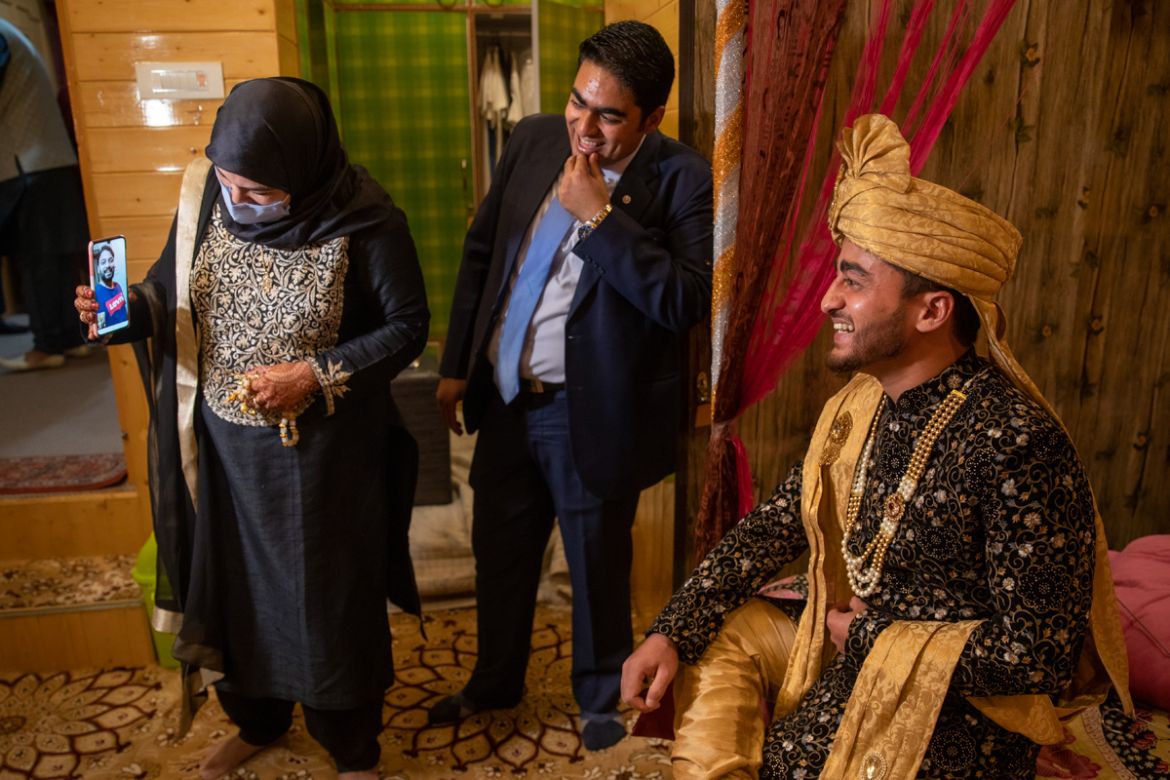
Khusheeba Munir, holds the cell phone as her husband Azhar Mahmood, who tested positive for COVID-19 and was not able to attend the marriage shares a lighter moment with his cousin and groom Haseeb Mu
Khusheeba Munir holds up her cell phone so her husband Azhar Mahmood, who tested positive for COVID-19 and was not able to attend, can share a lighter moment with his cousin, groom Haseeb Mushtaq. [Dar Yasin/AP Photo]
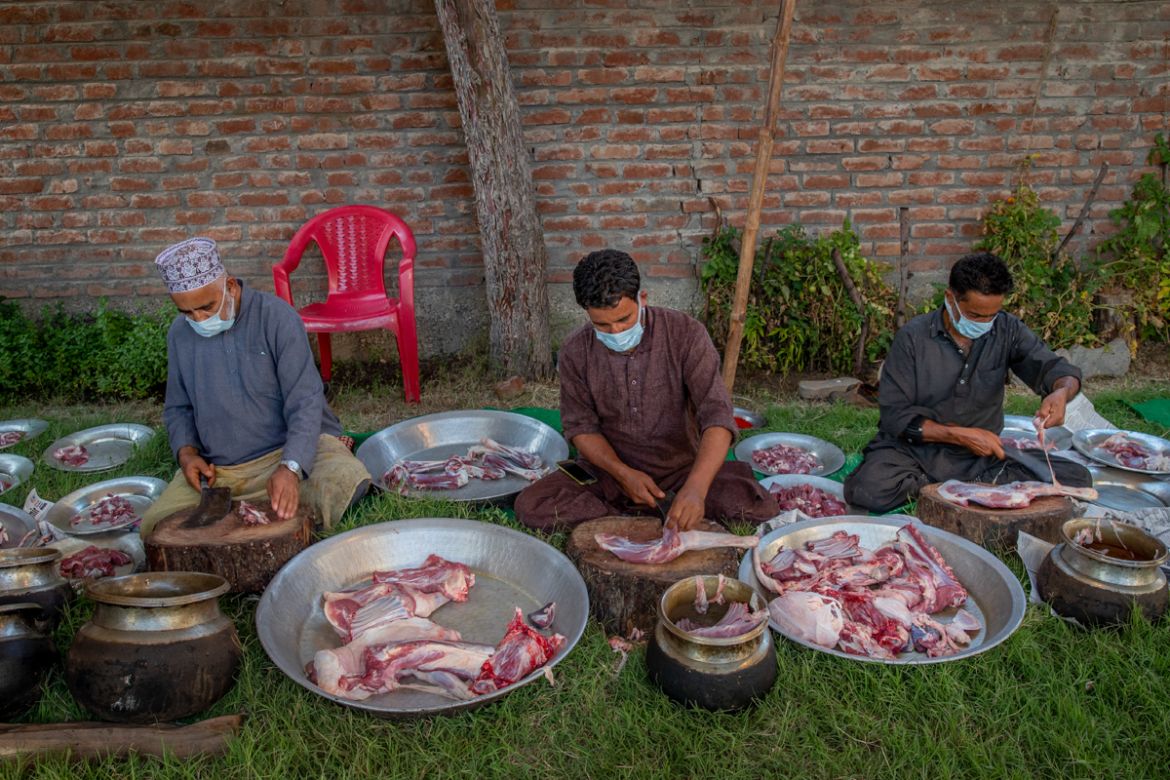
Kashmiri Wazas, or chefs, chop mutton before cooking for a wedding feast Wazwan on outskirts of Srinagar, Indian controlled Kashmir, Tuesday, Sept. 16, 2020. The coronavirus pandemic has changed the w
The chefs who cook Kashmir's traditional wedding feasts are known as Wazas. Normally, more than a dozen Wazas do the cooking; here a reduced team is shown preparing an unusually small amount of mutton for the Wazwan wedding feast. [Dar Yasin/AP Photo]
Advertisement
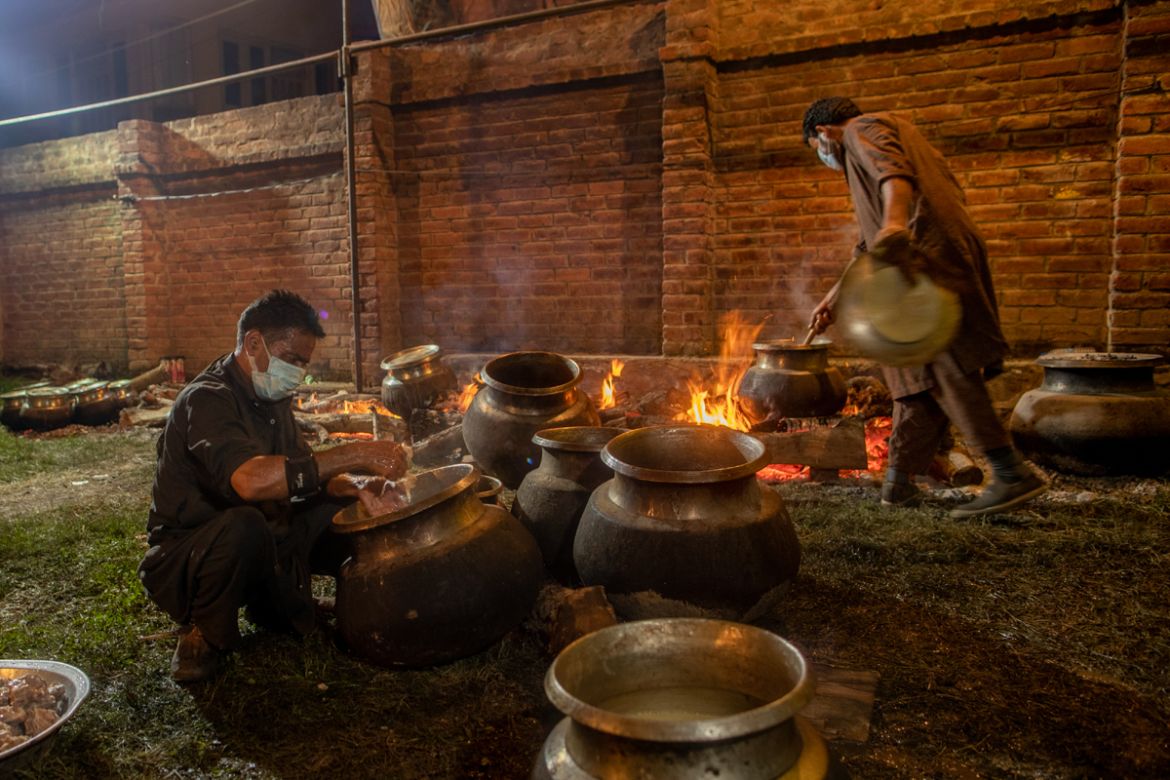
Kashmiri Wazas, or chefs, cook for a wedding feast Wazwan, on the outskirts of Srinagar, Indian controlled Kashmir, Tuesday, Sept. 16, 2020. The coronavirus pandemic has changed the way people celebra
With restrictions in place and many weddings cancelled, the traditional wedding chefs have little or no work. [Dar Yasin/AP Photo]
A Kashmir man in personal protective equipment sprays disinfectant to sanitize a wedding tent on the outskirts of Srinagar, Indian controlled Kashmir, Thursday, Sept. 17, 2020. The coronavirus pandemi
A man in personal protective equipment sprays disinfectant to sanitise a wedding tent. [Dar Yasin/AP Photo]
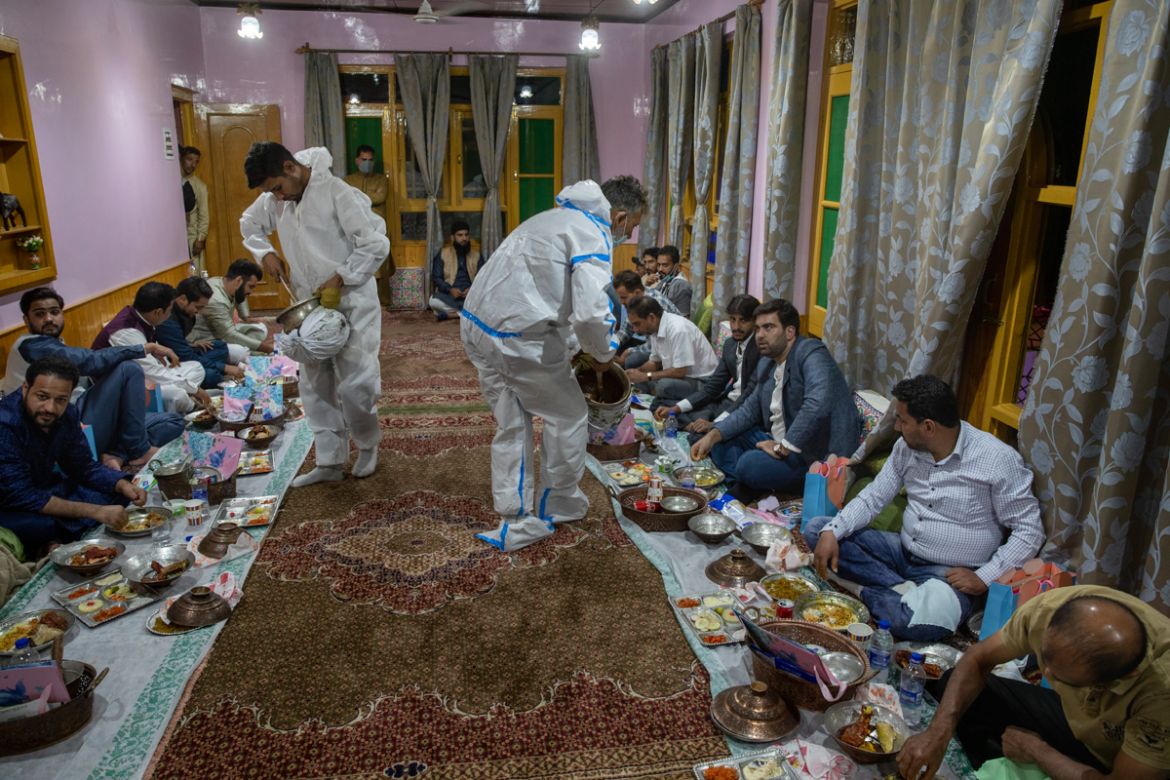
Kashmiri Wazas, or chefs, in personal protective equipment serve Wazwan during a wedding ceremony on outskirts of Srinagar, Indian controlled Kashmir, Tuesday, Sept. 15, 2020. The coronavirus pandemic
In the past, guests would gather in groups of four around a common dish to eat together. Now, Wazas in protective clothing serve a much-reduced number of guests on individual plates at the Wazwan. [Dar Yasin/AP Photo]
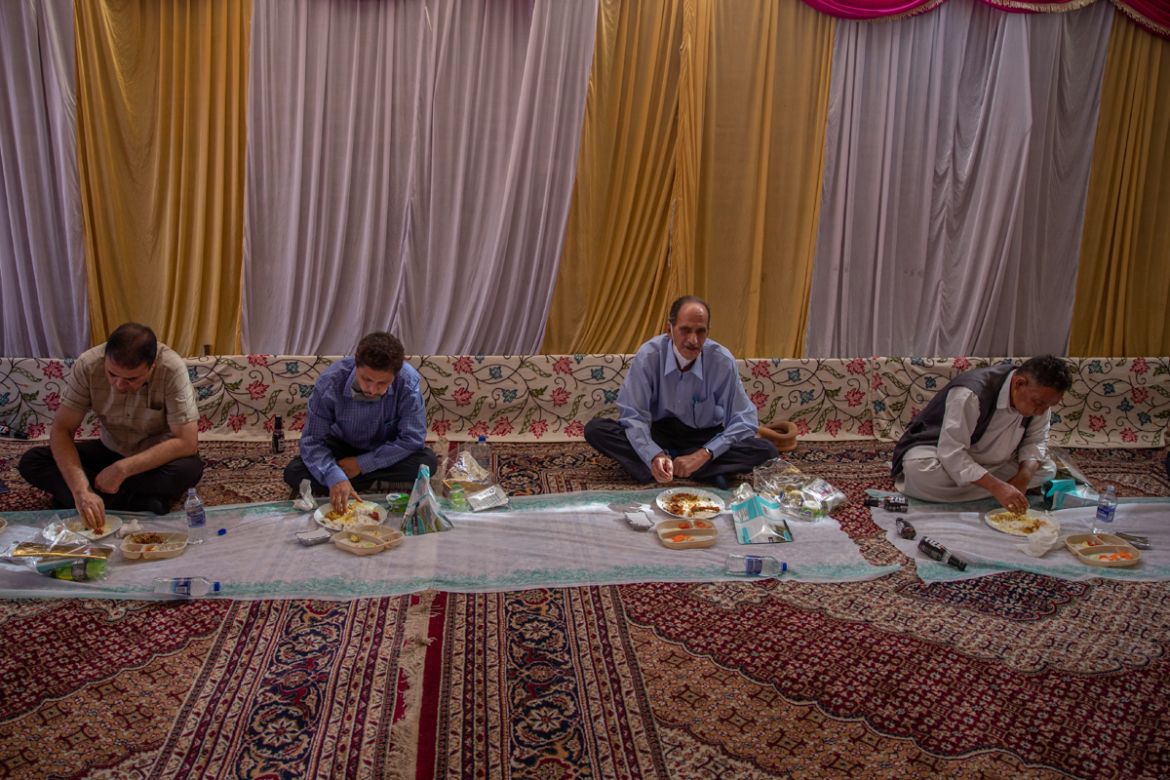
Kashmiri men eat a wedding feast Wazwan as they maintain social distance due to COVID-19 at a wedding on the outskirts of Srinagar, Indian controlled Kashmir, Tuesday, Sept. 15, 2020. The coronavirus
The Wazwan is served in both the bride and the groom's homes, but in both locations, guests had to sit observing physical distancing rules to eat. [Dar Yasin/AP Photo]
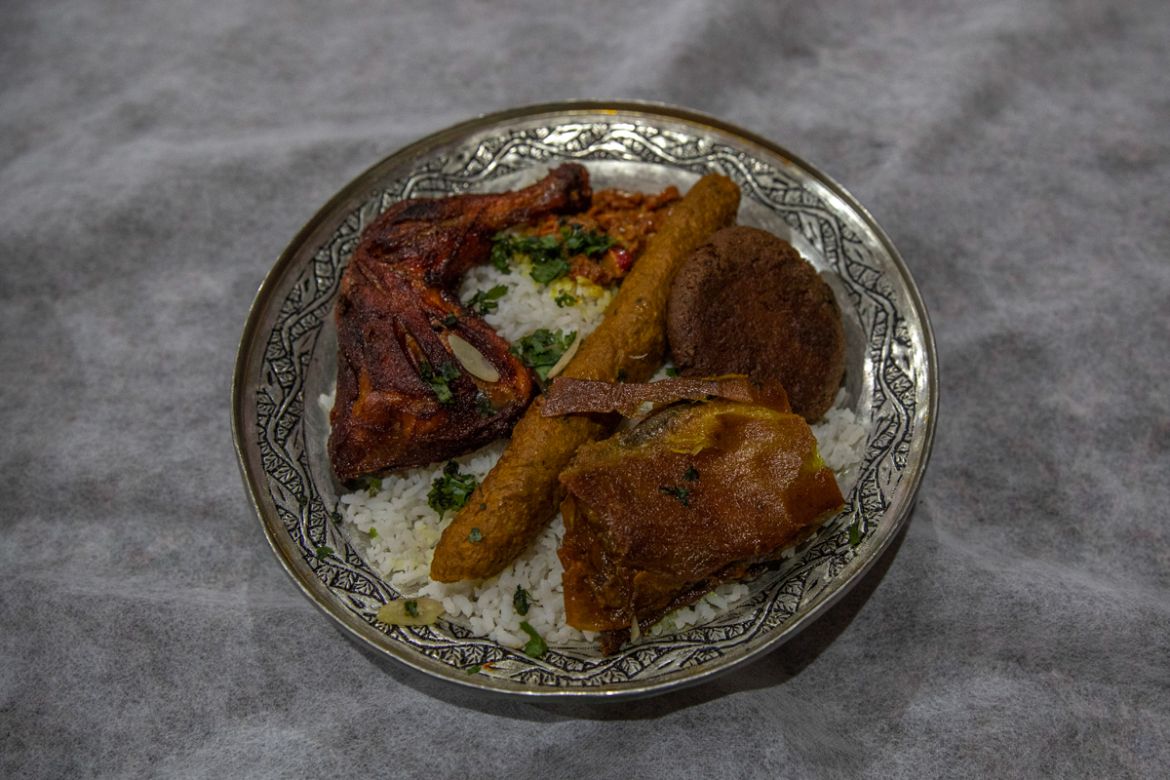
A plate full of rice dressed with wazwan dishes is kept in front of a guest during a wedding ceremony on outskirts of Srinagar, Indian controlled Kashmir, Tuesday, Sept. 15, 2020. The coronavirus pand
An individual plate full of wazwan delicacies is placed in front of a guest. [Dar Yasin/AP Photo]
Relatives and neighbors walk along with Haseeb Mushtaq, a Kashmiri groom during his wedding ceremony on the outskirts of Srinagar, Indian controlled Kashmir, Monday, Sept. 14, 2020. The coronavirus pa
Family, friends and neighbours follow Haseeb Mushtaq in a procession to his home's front gate as sets out for his bride's home to celebrate their wedding. [Dar Yasin/AP Photo]


  • About

    • About Us
    • Code of Ethics
    • Terms and Conditions
    • EU/EEA Regulatory Notice
    • Privacy Policy
    • Cookie Policy
    • Cookie Preferences
    • Accessibility Statement
    • Sitemap
    • Work for us
  • Connect

    • Contact Us
    • User Accounts Help
    • Advertise with us
    • Stay Connected
    • Newsletters
    • Channel Finder
    • TV Schedule
    • Podcasts
    • Submit a Tip
  • Our Channels

    • Al Jazeera Arabic
    • Al Jazeera English
    • Al Jazeera Investigative Unit
    • Al Jazeera Mubasher
    • Al Jazeera Documentary
    • Al Jazeera Balkans
    • AJ+
  • Our Network

    • Al Jazeera Centre for Studies
    • Al Jazeera Media Institute
    • Learn Arabic
    • Al Jazeera Centre for Public Liberties & Human Rights
    • Al Jazeera Forum
    • Al Jazeera Hotel Partners

Follow Al Jazeera English:

  • facebook
  • twitter
  • youtube
  • instagram-colored-outline
  • rss
Al Jazeera Media Network logo
© 2025 Al Jazeera Media Network