Skip linksSkip to Content
play
Live
Navigation menu
  • News
    • Africa
    • Asia
    • US & Canada
    • Latin America
    • Europe
    • Asia Pacific
  • Middle East
  • Explained
  • Opinion
  • Sport
  • Video
    • Features
    • Economy
    • Human Rights
    • Climate Crisis
    • Investigations
    • Interactives
    • In Pictures
    • Science & Technology
    • Podcasts
    • Travel
play
Live

In Pictures

Gallery|Racism

Between bureaucracy and violence, Pakistanis in Greece push back

Five years after 27-year-old Shahzad Luqman’s murder in Athens, far-right attacks continue to plague Pakistani migrants.
Between bureaucracy and violence, Pakistanis in Greece push back
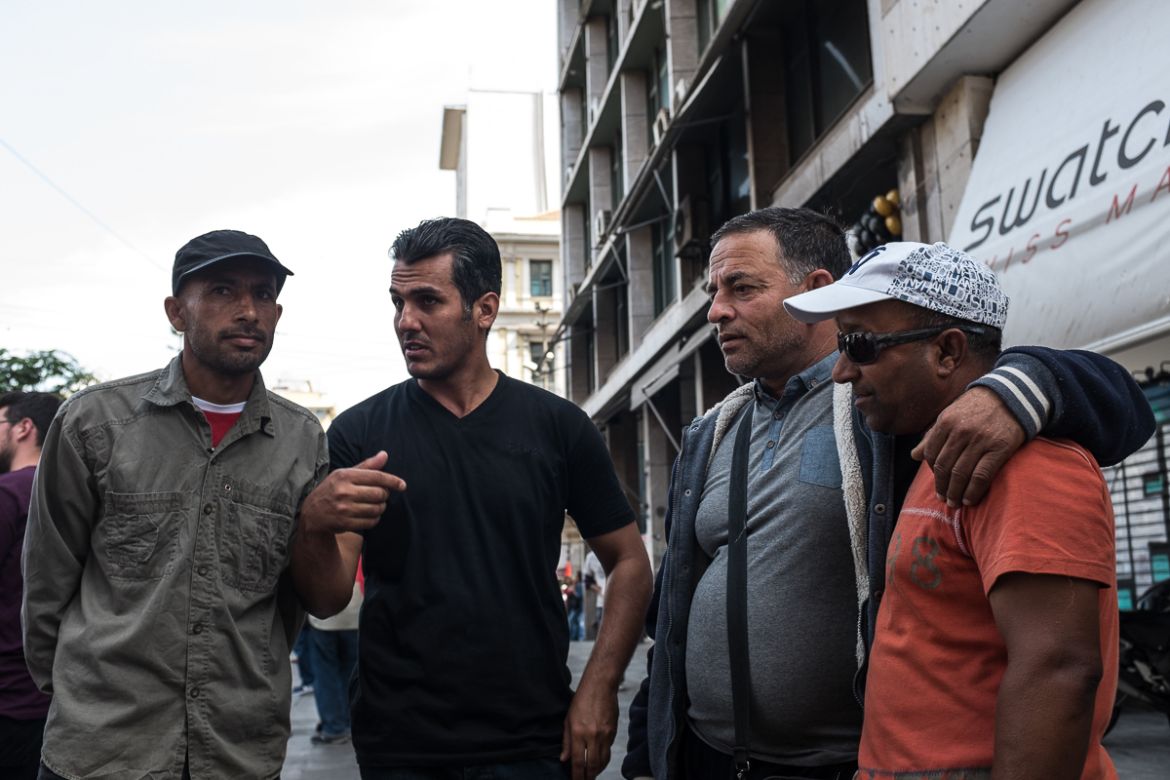
Ashfaq Mahmoud (left) and Qamar Zaman (right) both fell victim to far-right violence in 2017. [Nick Paleologos/SOOC/Al Jazeera]
Published On 26 Aug 201826 Aug 2018

Share

facebooktwitterwhatsappcopylink

Save

Athens, Greece – Well before the sun came up on January 17, 2013, Shahzad Luqman woke up, hopped on his bicycle and took off for work in a suburb of the Greek capital, Athens.

The 27-year-old Pakistani, who had been in Greece for six years, was going from his home in the Peristeri neighbourhood to nearby Petralona to unload oranges at the farmers market.

Undocumented & under attack: Pakistani migrant workers | This is Europe

But before he could reach work, he was stabbed seven times and left to bleed out in the street.

When police swept the homes of the killers, they found leaflets published by Golden Dawn, the Greek neo-fascist party that currently has 16 seats in the country’s parliament.

The incident wrought trauma in Greece’s migrant community, particularly among Pakistanis, who are estimated to be around 50,000 in number and have been migrating in ebbs and flows to the Mediterranean country since the 1970s.

{articleGUID}

Javied Aslam, the 50-year-old president of the Pakistani Community of Greece and head of the Union of Immigrant Workers, remembers the day Luqman was killed as a turning point.

“They [had] targeted and attacked around 1,000 workers. And not one Golden Dawn member was punished until Luqman was killed and his two murderers were arrested,” Aslam told Al Jazeera.

“That was the first time anyone from their party was arrested.”

Five years later, Aslam said migrant workers continue to bear the brunt of far-right violence.

In 2017, the number of hate crimes motivated by race, skin colour and national origin almost tripled compared to the year before, according to police.

Advertisement

Qamar Zaman was among those attacked when he got off a bus in Athens. A group of young Greeks followed him, beat him up and fled with some of his belongings when passersby approached.

“My life was saved because of that [people approaching],” said Zaman. “Otherwise, I would’ve probably died.”

Between bureaucracy and violence, Pakistanis in Greece push back
Mahmoud, 40, was working in an agricultural field in October 2017 when a group of young Greeks beat him up, stabbed him and bludgeoned him with stones. "They targeted me because I used to inform the police [of attacks] and also keep the other workers… informed," he told Al Jazeera. [Nick Paleologos/SOOC/Al Jazeera].
Advertisement
Between bureaucracy and violence, Pakistanis in Greece push back
Javied Aslam (centre), president of the Pakistani Community in Greece, has acted as a de facto monitor of far-right violence for the last eight years. "There's a formula I tell all the workers: If you don't assimilate, you will remain weak'," he told Al Jazeera. [Nick Paleologos/SOOC/Al Jazeera]
Between bureaucracy and violence, Pakistanis in Greece push back
Aslam, who moved to Greece in 1996, said Pakistanis began to fall in the crosshairs of far-right parties and groups around 2010. "They have inflicted a lot of pain and carried out racist attacks, including murders," he said. [Nick Paleologos/SOOC/Al Jazeera]
Between bureaucracy and violence, Pakistanis in Greece push back
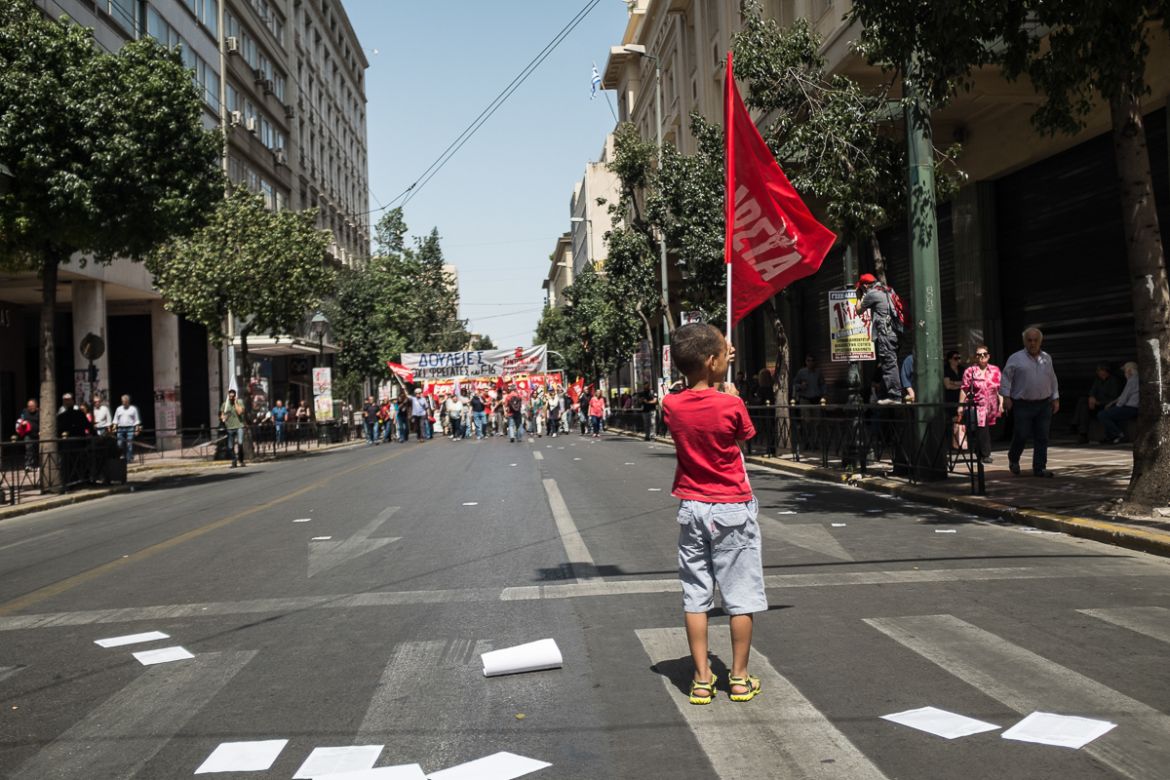
Led by Aslam's Pakistani Community of Greece, the migrant workers have played a leading role in anti-fascist demonstrations in recent years, often taking to the streets after attacks. [Nick Paleologos/SOOC/Al Jazeera]
Between bureaucracy and violence, Pakistanis in Greece push back
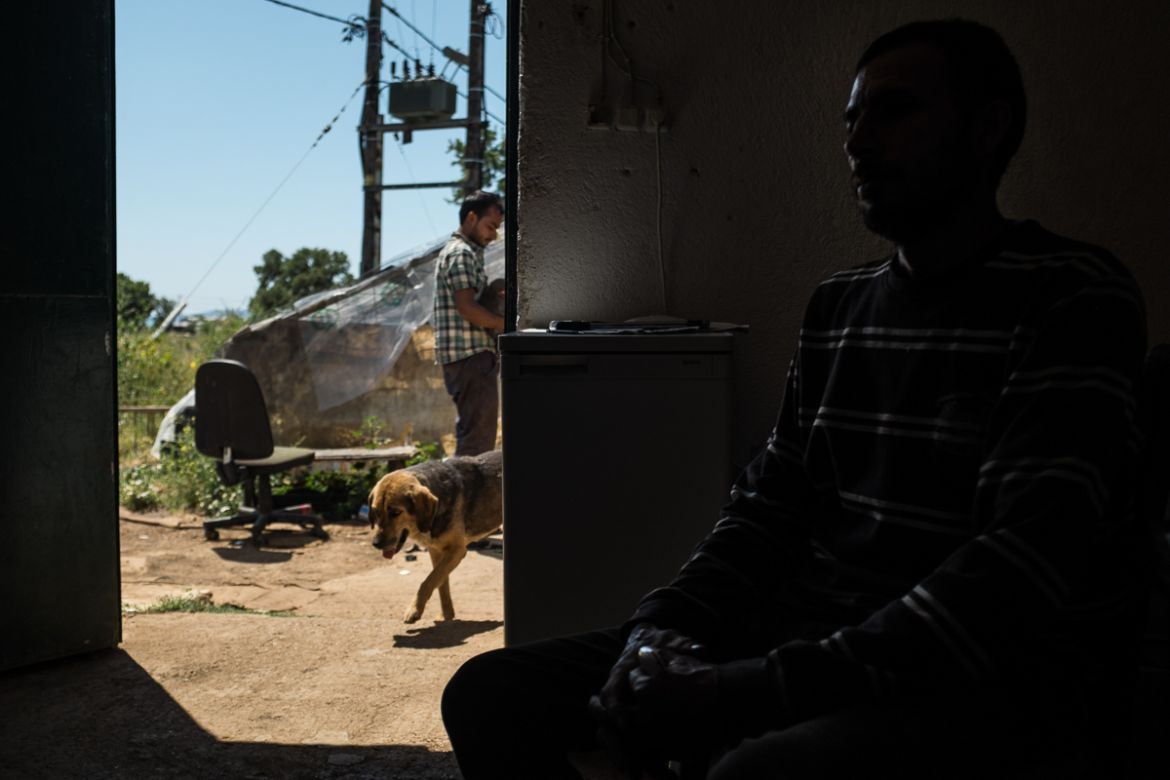
Mahmoud's attack came after months of beatings and threats in Goritsa, the farming village where he works and lives. "In Gortisa, you can find a victim in every home," he said. "Over the past two years, not only I, but many other men have been attacked." [Nick Paleologos/SOOC/Al Jazeera]
Between bureaucracy and violence, Pakistanis in Greece push back
Pakistani migrant workers, who make up around 90 percent of Greece's agricultural employees, have also endured a spate of labour disputes. [Nick Paleologos/SOOC/Al Jazeera]
Advertisement
Between bureaucracy and violence, Pakistanis in Greece push back
In addition to being attacked, Pakistanis in Greece often struggle to obtain residency. [Nick Paleologos/SOOC/Al Jazeera]
Between bureaucracy and violence, Pakistanis in Greece push back
The Racist Violence Recording Network documented at least 871 violent hate crimes between 2012 and 2017. Out of those, more than half targeted refugees and migrants. [Nick Paleologos/SOOC/Al Jazeera]
Between bureaucracy and violence, Pakistanis in Greece push back
Pakistanis were increasingly targeted in Goritsa last year. Many packed up and moved to safer areas. But Mahmoud refused, as he feared leaving his job would embolden the far-right attackers. [Nick Paleologos/SOOC/Al Jazeera]
Between bureaucracy and violence, Pakistanis in Greece push back
Mahmoud insists that Pakistani workers must fight for their rights on their own. "None of our bosses will help us," he said. "If I told my boss that I'm going to a protest, he wouldn't let me go." [Nick Paleologos/SOOC/Al Jazeera]
Between bureaucracy and violence, Pakistanis in Greece push back
According to the workers, some Greek bosses threatened to call Golden Dawn when the workers complained of work conditions or demanded back pay. Racist hate crimes have continued at a steady pace into 2018 after nearly tripling last year. [Nick Paleologos/SOOC/Al Jazeera]


  • About

    • About Us
    • Code of Ethics
    • Terms and Conditions
    • EU/EEA Regulatory Notice
    • Privacy Policy
    • Cookie Policy
    • Cookie Preferences
    • Accessibility Statement
    • Sitemap
    • Work for us
  • Connect

    • Contact Us
    • User Accounts Help
    • Advertise with us
    • Stay Connected
    • Newsletters
    • Channel Finder
    • TV Schedule
    • Podcasts
    • Submit a Tip
    • Paid Partner Content
  • Our Channels

    • Al Jazeera Arabic
    • Al Jazeera English
    • Al Jazeera Investigative Unit
    • Al Jazeera Mubasher
    • Al Jazeera Documentary
    • Al Jazeera Balkans
    • AJ+
  • Our Network

    • Al Jazeera Centre for Studies
    • Al Jazeera Media Institute
    • Learn Arabic
    • Al Jazeera Centre for Public Liberties & Human Rights
    • Al Jazeera Forum
    • Al Jazeera Hotel Partners

Follow Al Jazeera English:

  • facebook
  • twitter
  • youtube
  • instagram-colored-outline
  • rss
Al Jazeera Media Network logo
© 2025 Al Jazeera Media Network