Skip linksSkip to Content
play
Live
Navigation menu
  • News
    • Africa
    • Asia
    • US & Canada
    • Latin America
    • Europe
    • Asia Pacific
  • Middle East
  • Explained
  • Opinion
  • Sport
  • Video
    • Features
    • Economy
    • Human Rights
    • Climate Crisis
    • Investigations
    • Interactives
    • In Pictures
    • Science & Technology
    • Podcasts
    • Travel
play
Live

In Pictures

Gallery|Coronavirus pandemic

In Pictures: Thai scientists catch bats to trace virus origins

Research team took saliva, blood, and stool samples from the bats before releasing them.
Save

Share

facebookxwhatsapp-strokecopylink
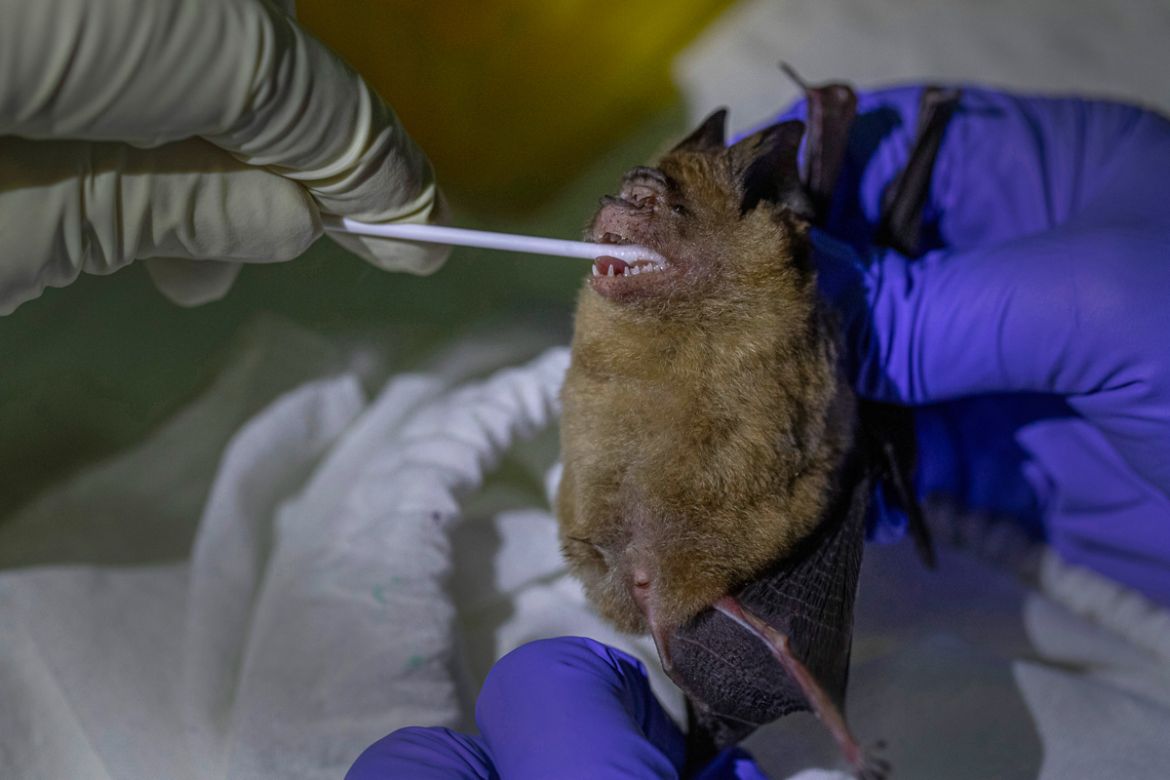
A researcher swaps samples from a bat''s mouth inside Sai Yok National Park in Kanchanaburi province, west of Bangkok, Thailand, Friday, July 31, 2020. Researchers in Thailand have been trekking though
A researcher takes samples from a bat's mouth inside Sai Yok National Park in Kanchanaburi province, west of Bangkok. [Sakchai Lalit/AP Photo]
Published On 13 Aug 202013 Aug 2020

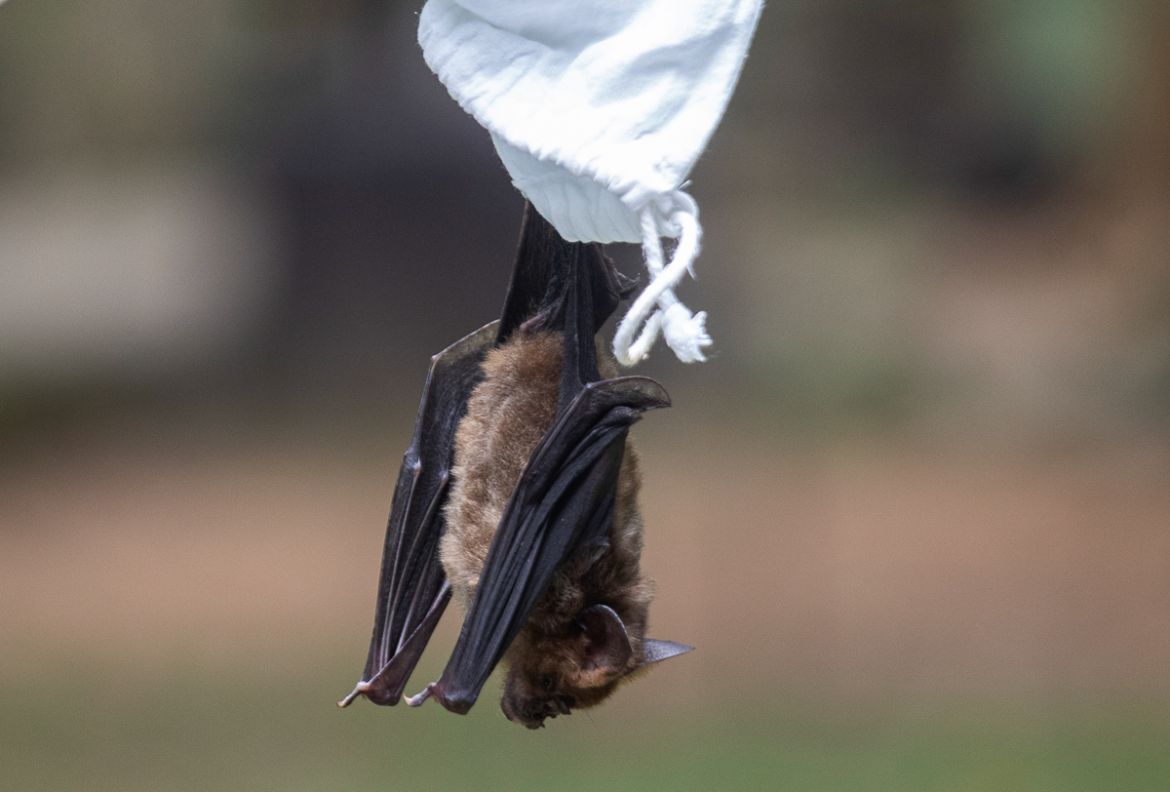
Researchers in Thailand have been trekking through the countryside to catch bats in their caves in an effort to help trace the origins of the coronavirus.

Initial research has already pointed to bats as the source of the virus that has afflicted more than 20.5 million people and caused the deaths of 748,000 worldwide, according to Johns Hopkins University data.

The closest match to the coronavirus has been found in horseshoe bats in Yunnan in southern China. Thailand has 19 species of horseshoe bats but researchers said they have not yet been tested for the new coronavirus.

Thai researchers hiked up a hill in Sai Yok National Park in the western province of Kanchanaburi to set up nets to trap some 200 bats from three different caves.

The team from the Thai Red Cross Emerging Infectious Diseases-Health Science Center took saliva, blood, and stool samples from the bats before releasing them.

The team was headed by Supaporn Wacharapluesadee, the centre’s deputy chief, who has studied bats and diseases associated with them for more than 20 years. 

Supaporn said it is likely the researchers will find the same virus that causes COVID-19 in Thailand’s bats.

“The pandemic is borderless. The disease can travel with bats. It could go anywhere,” Supaporn said.
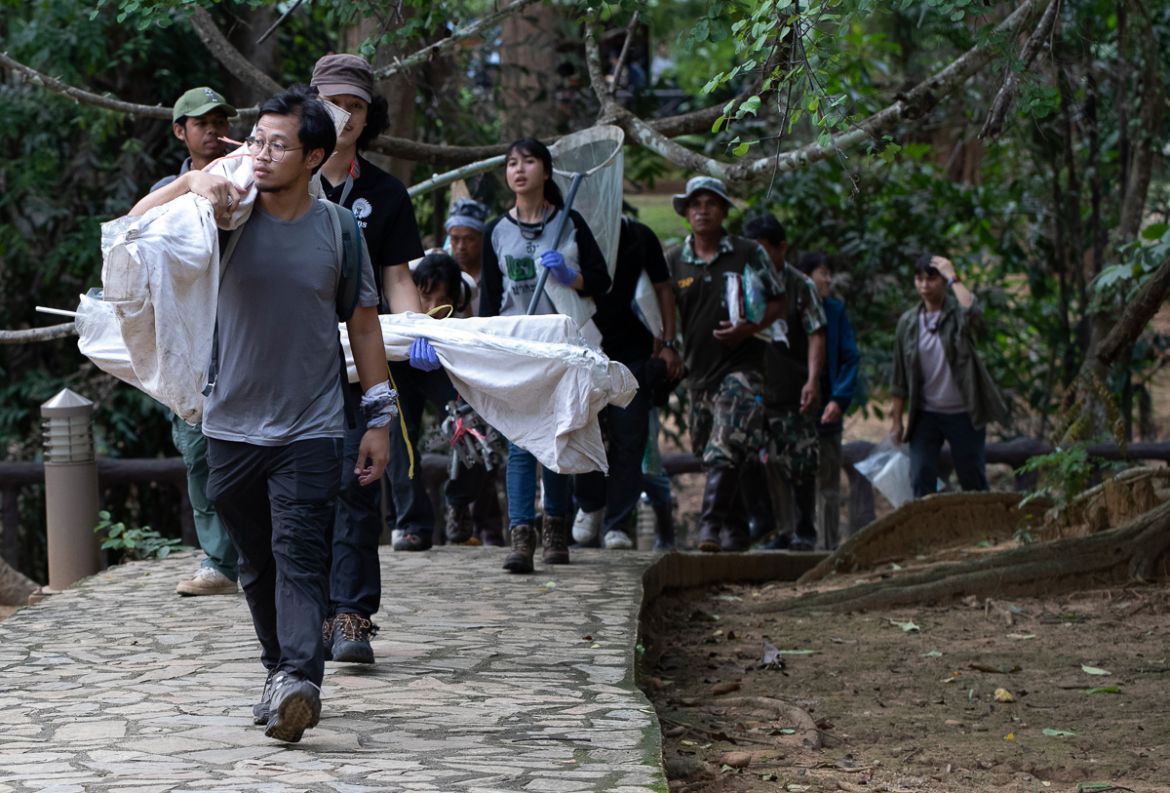
Researchers carry equipment for catch bat in a cave inside Sai Yok National Park in Kanchanaburi province, west of Bangkok, Thailand, Friday, July 31, 2020. Researchers in Thailand have been trekking
Researchers in Thailand have been trekking though the countryside to catch bats in their caves in an effort to trace the murky origins of the coronavirus. [Sakchai Lalit/AP Photo]
Advertisement
Researchers set up equipment for catch bat in front of cave inside Sai Yok National Park in Kanchanaburi province, west of Bangkok, Thailand, Friday, July 31, 2020. Thai researchers are collecting sam
Researchers set up equipment to catch bats in front of a cave inside Sai Yok National Park. [Sakchai Lalit/AP Photo]
Researchers putting on PPE suits and standing in front of cave prepare catch bat inside Sai Yok National Park in Kanchanaburi province, west of Bangkok, Thailand, Friday, July 31, 2020. Researchers in
Researchers put on personal protective equipment and get ready to go inside a cave in Sai Yok National Park. [Sakchai Lalit/AP Photo]
Researchers catch bat in front of cave inside Sai Yok National Park in Kanchanaburi province, west of Bangkok, Thailand, Friday, July 31, 2020. Researchers in Thailand have been trekking though the co
Thai researchers are collecting samples from bats to test if they could carry coronavirus. [Sakchai Lalit/AP Photo]
Researcher put bat into bag in cave inside Sai Yok National Park in Kanchanaburi province, west of Bangkok, Thailand, Saturday, Aug. 1, 2020. Researchers in Thailand have been trekking though the coun
The result could help answer some of the questions about the origin of COVID-19. [Sakchai Lalit/AP Photo]
Researchers swap samples from a bat''s mouth inside Sai Yok National Park in Kanchanaburi province, west of Bangkok, Thailand, Friday, July 31, 2020. Researchers in Thailand have been trekking though t
Initial research has already pointed to bats as the source of the virus. [Sakchai Lalit/AP Photo]
Advertisement
A researcher measures a bat inside Sai Yok National Park in Kanchanaburi province, west of Bangkok, Thailand, Friday, July 31, 2020. Researchers in Thailand have been trekking though the countryside t
Thailand has 19 species of horseshoe bats but researchers say they have not yet been tested for the new coronavirus. [Sakchai Lalit/AP Photo]
A researcher releases a bat after taking blood sample bat inside Sai Yok National Park in Kanchanaburi province, west of Bangkok, Thailand, Saturday, Aug. 1, 2020. Researchers in Thailand have been tr
A researcher releases a bat after collecting saliva and blood samples. [Sakchai Lalit/AP Photo]


  • About

    • About Us
    • Code of Ethics
    • Terms and Conditions
    • EU/EEA Regulatory Notice
    • Privacy Policy
    • Cookie Policy
    • Cookie Preferences
    • Accessibility Statement
    • Sitemap
    • Work for us
  • Connect

    • Contact Us
    • User Accounts Help
    • Advertise with us
    • Stay Connected
    • Newsletters
    • Channel Finder
    • TV Schedule
    • Podcasts
    • Submit a Tip
    • Paid Partner Content
  • Our Channels

    • Al Jazeera Arabic
    • Al Jazeera English
    • Al Jazeera Investigative Unit
    • Al Jazeera Mubasher
    • Al Jazeera Documentary
    • Al Jazeera Balkans
    • AJ+
  • Our Network

    • Al Jazeera Centre for Studies
    • Al Jazeera Media Institute
    • Learn Arabic
    • Al Jazeera Centre for Public Liberties & Human Rights
    • Al Jazeera Forum
    • Al Jazeera Hotel Partners

Follow Al Jazeera English:

  • facebook
  • twitter
  • youtube
  • instagram-colored-outline
  • rss
Al Jazeera Media Network logo
© 2026 Al Jazeera Media Network