Skip linksSkip to Content
play
Live
Navigation menu
  • News
    • Africa
    • Asia
    • US & Canada
    • Latin America
    • Europe
    • Asia Pacific
  • Middle East
  • Explained
  • Opinion
  • Sport
  • Video
    • Features
    • Economy
    • Human Rights
    • Climate Crisis
    • Investigations
    • Interactives
    • In Pictures
    • Science & Technology
    • Podcasts
    • Travel
play
Live

In Pictures

Gallery

Traditional hammams cut into Morocco’s forests

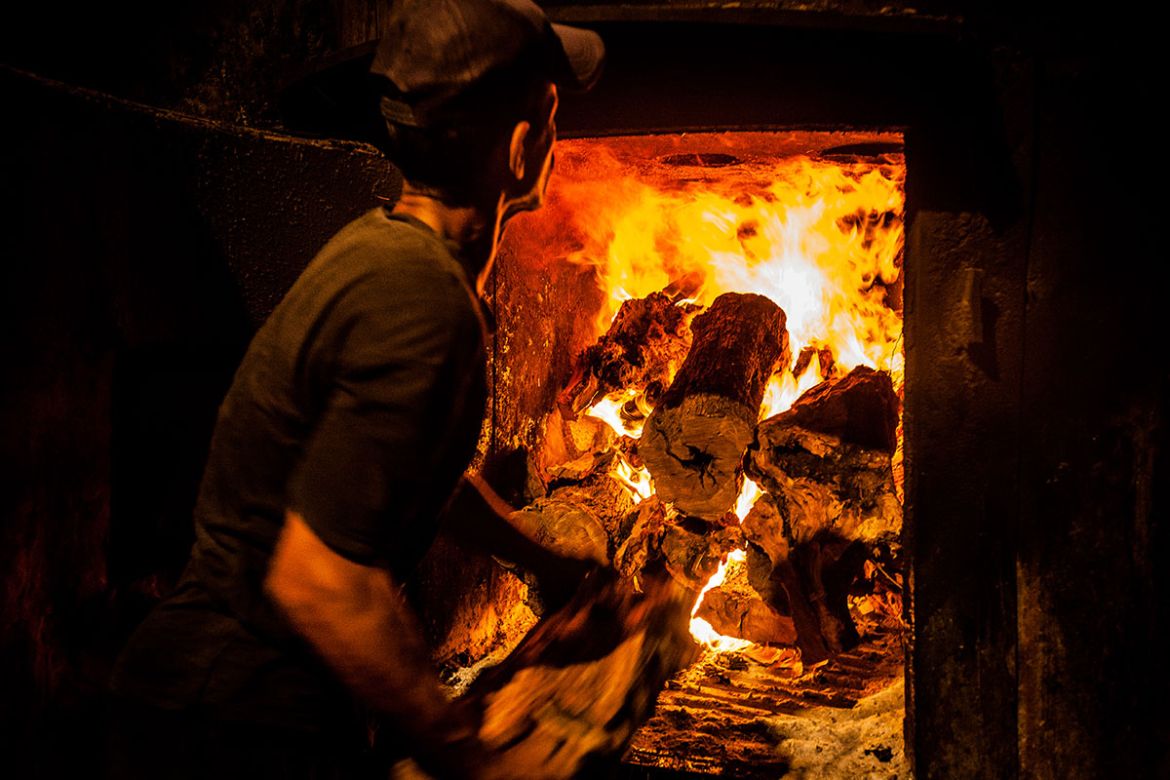
Each hammam uses an average of one tonne of wood per day to heat the rooms and water.

Traditional hammams/ Please Do Not Use
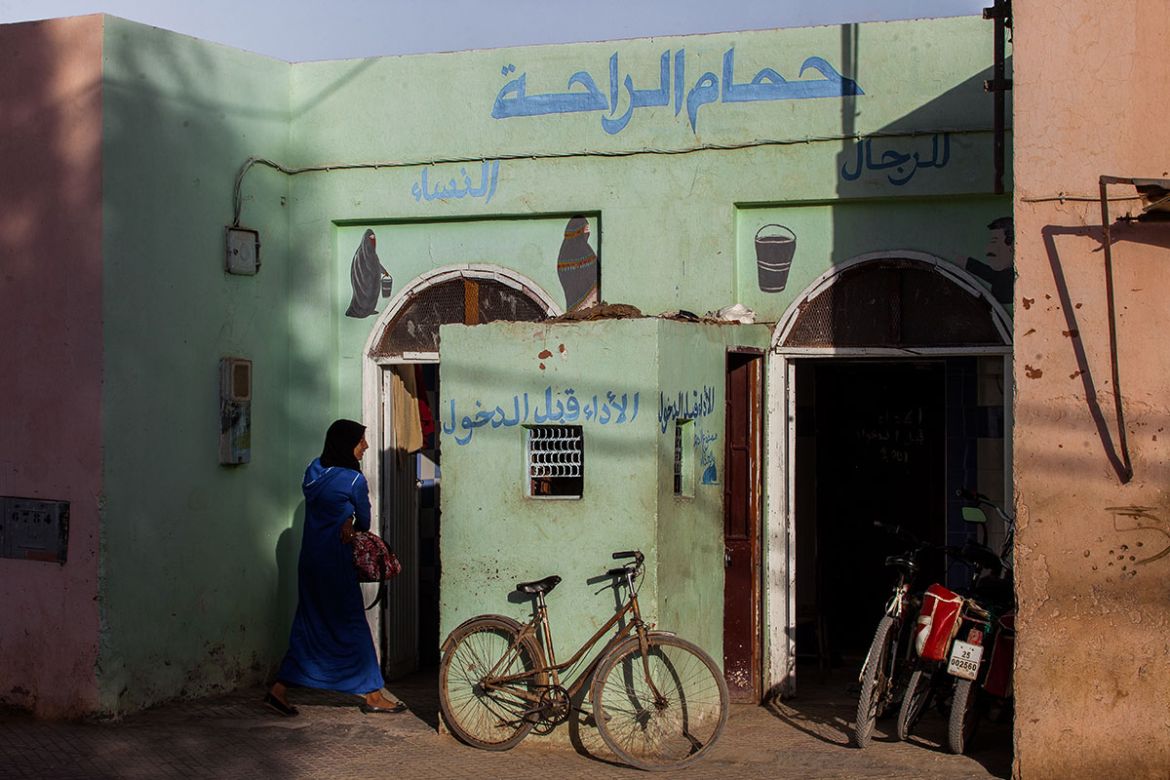
Casablanca, the economic capital of Morocco, has more than three million residents and thousands of hammams. [Sebastian Castelier/Al Jazeera]

By Perrine Massy and Timothee Vinchon

Published On 14 Nov 201614 Nov 2016

Share

facebooktwitterwhatsappcopylink

Save

As Morocco hosts the COP22 climate change conference, fresh concerns have been raised about excessive wood consumption in the country’s thousands of hammams, with each using an average of one tonne of wood per day to heat the rooms and water. 

“Have you been in a traditional hammam? If the answer is no, people will say, ‘It’s such a pity’,” said Youssef Laabid, president of the Association of Traditional Hammam Owners in Marrakech.

In addition to being a tourist draw, hammams remain highly popular among Moroccans as a place of cleansing, relaxation and socialising, in a tradition that dates back to Roman times. 

Firewood consumption, however, has had a significant impact on Morocco’s forests. The second-largest source of energy in Morocco after oil, firewood accounts for around a third of national energy consumption, while firewood collection is a major source deforestation and degradation of Morocco’s forests.
Traditional hammams/ Please Do Not Use
'I have no bathing room at home. I go to the hammam once a week, and even twice a week in the winter,' said Mohamed Bougalla, 51, a cigarette seller from Marrakech. [Sebastian Castelier/Al Jazeera]
Advertisement
Traditional hammams/ Please Do Not Use
The entry fee for a hammam is usually around 10 dirhams ($1). But hammam owners have found their profit margins reduced amid rising wood prices. 'A decade ago, I used to pay 350, 400 dirhams [$35 to $40] per tonne. Now it's 800, 850 dirhams [$80 to $85),' said Khadija Kadiri, a hammam manager in Rabat. [Sebastian Castelier/Al Jazeera]
Traditional hammams/ Please Do Not Use
Rachid N'Chech, 57, works to fuel the Rja Fellah hammam in Rabat. [Sebastian Castelier/Al Jazeera]
Traditional hammams/ Please Do Not Use
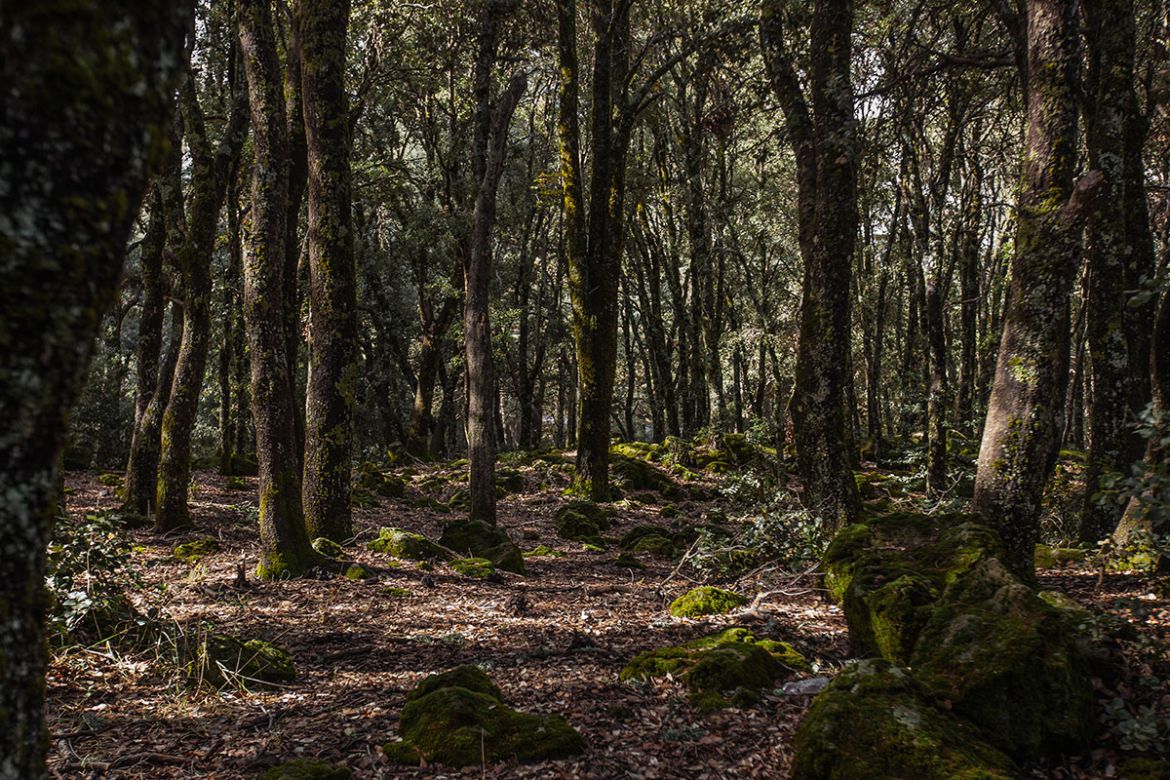
'The Moroccan forest is disappearing,' said Mohammed Ellatifi, a former high-ranking official with the country's water and forest authority. Firewood collected each year exceeds the natural ability of the forest by three times, he said. [Sebastian Castelier/Al Jazeera]
Traditional hammams/ Please Do Not Use
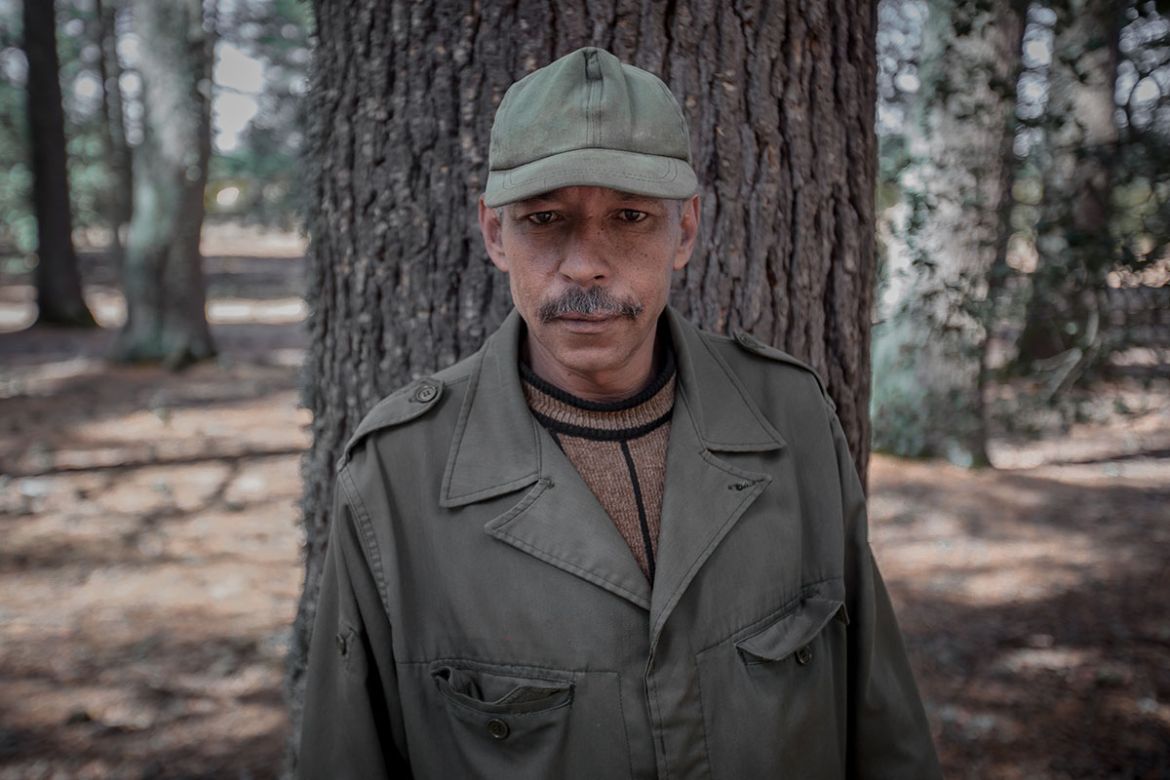
Hamid Ganib, 48, patrols and participates in the protection of several forested areas in collaboration with forestry services. It is part of a pilot project aimed at involving local communities in the preservation of the forests. [Sebastian Castelier/Al Jazeera]
Traditional hammams/ Please Do Not Use
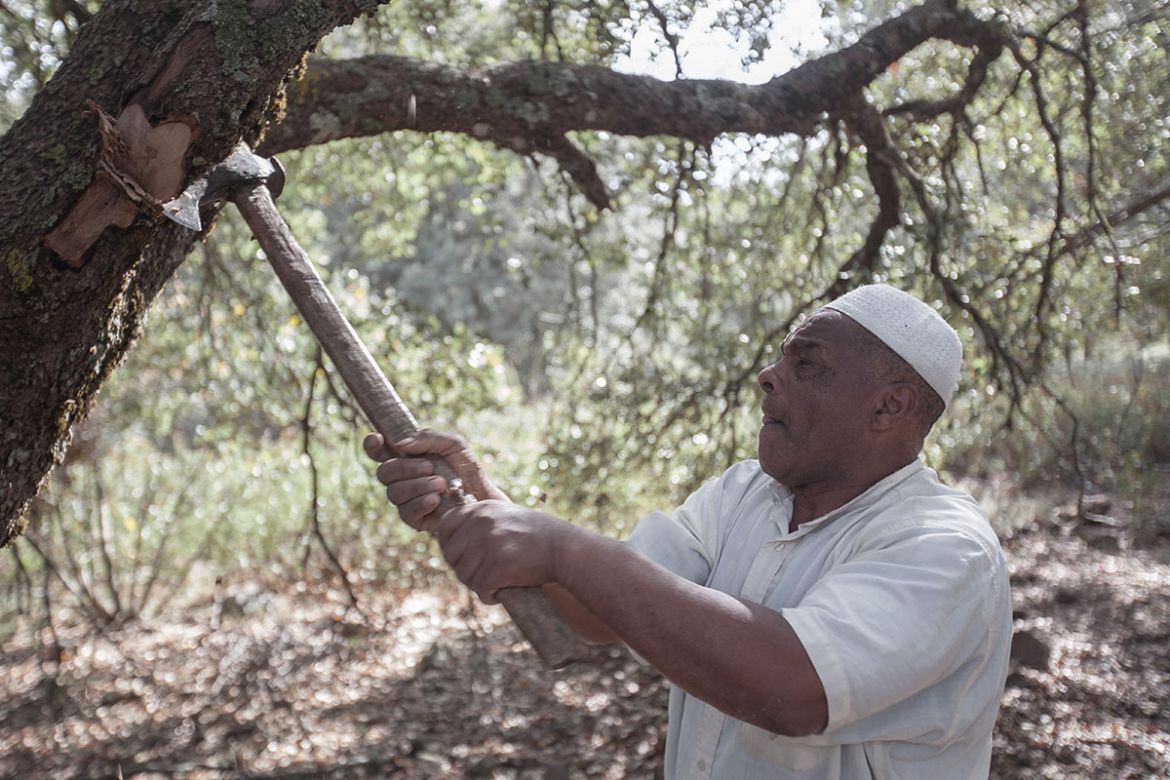
A farmer cuts firewood from a green oak, both for his own consumption and to be sold to hammams and bread ovens in the city. [Sebastian Castelier/Al Jazeera]
Advertisement
Traditional hammams/ Please Do Not Use
A truck filled with cedar waits to leave a forest bordering the city of Ifrane. [Sebastian Castelier/Al Jazeera]
Traditional hammams/ Please Do Not Use
A labourer cuts hundreds of green oak trunks in a factory in the city of Azrou. [Sebastian Castelier/Al Jazeera]
Traditional hammams/ Please Do Not Use
A sign warns against the issue of possible bribes at the Centre for Preservation and Development of Forest Resources. 'The legal [wood] circulates, the illegal [wood] circulates. At the end, the legal hides the smuggling,' one logger said. [Sebastian Castelier/Al Jazeera]
Traditional hammams/ Please Do Not Use
For COP 22 commissioner Abdeladim Lhafi, the high commissioner for water and forests, a main problem is traceability: 'Today, when someone cuts wood [illegally] from the forest which then finds itself in a city to be used in a Moorish bath or a bakery, he is saved [from prosecution].' [Sebastian Castelier/Al Jazeera]
Traditional hammams/ Please Do Not Use
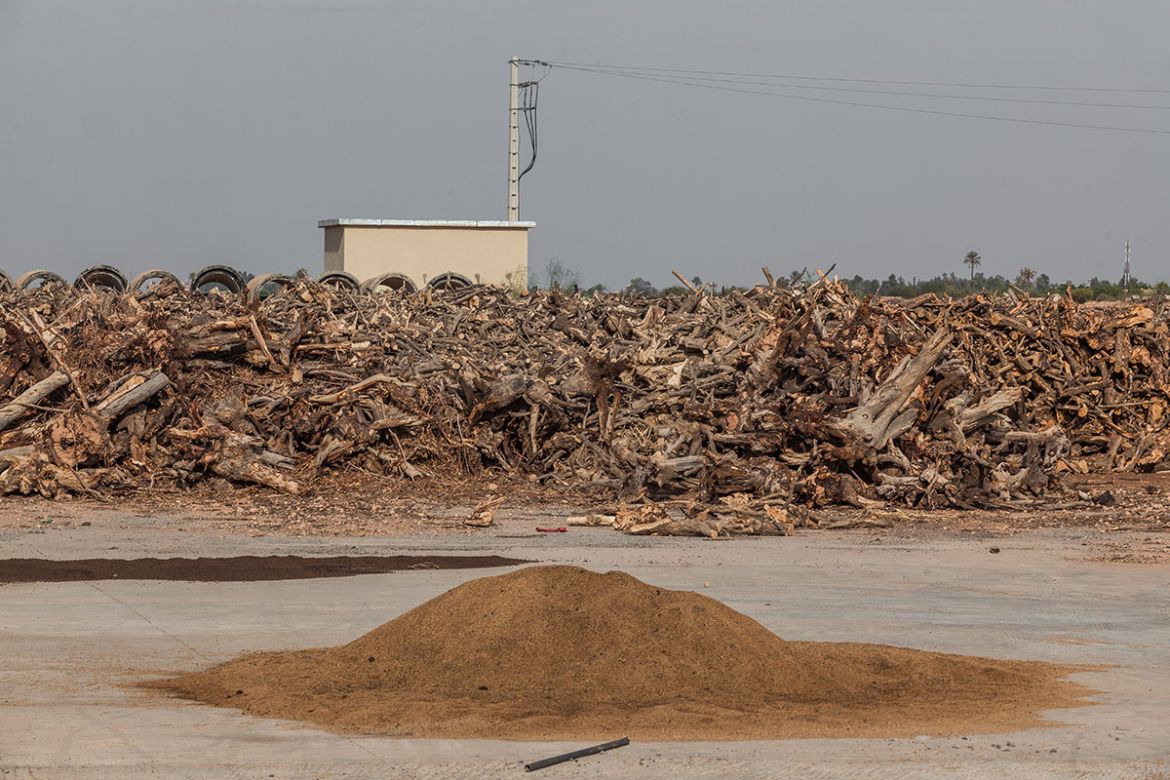
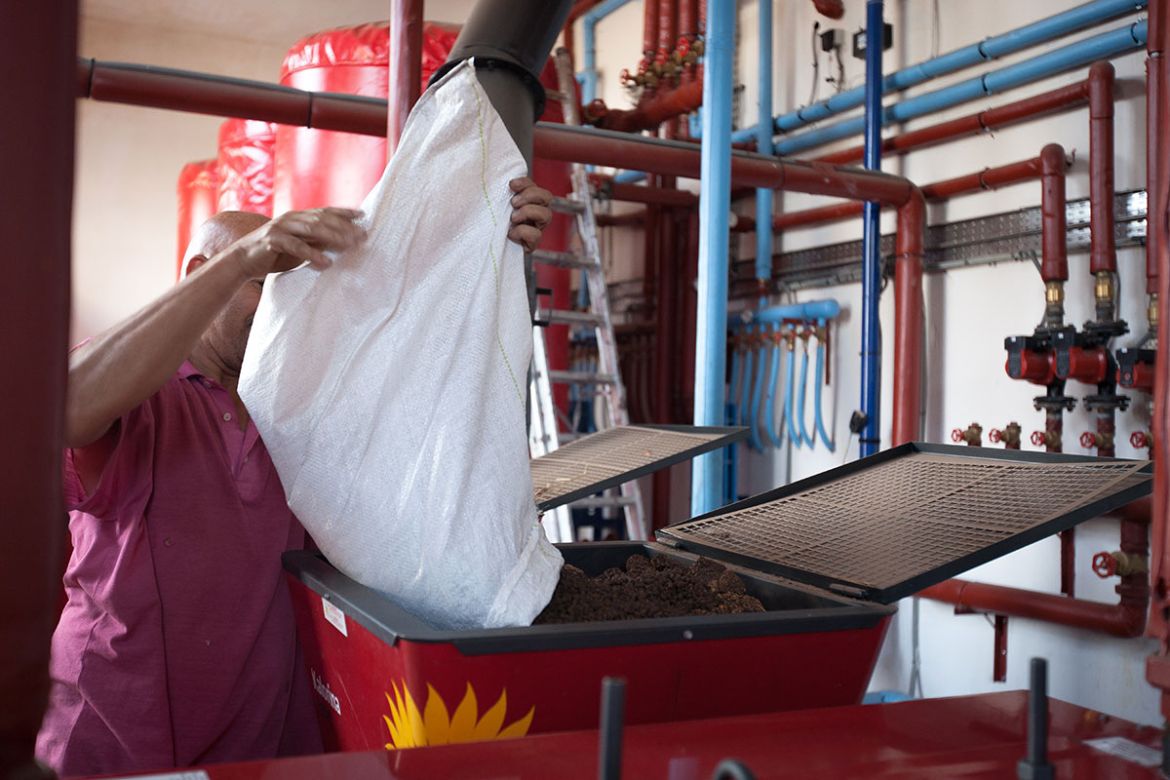
Facing hundreds of wooden stumps, a pile of argan shells lies on the ground of an artisanal factory owned by hammam owner Mehdi Khaldoun. He decided to use agricultural residues, such as argan shells and olive pits, instead of wood. [Sebastian Castelier/Al Jazeera]
Traditional hammams/ Please Do Not Use
'It's a self-regenerating resource,' Khaldoun says of the argan shells. 'In the family, we have five hammams ... It's my father who wanted us to change. Without him, we would never have done it.' [Sebastian Castelier/Al Jazeera]
Traditional hammams/ Please Do Not Use
Lahcen Belhassou, 65, puts pelletised fuel into the hammam's new-generation furnace. 'These are substantial cost savings ... We are able to halve the fuel consumption,' he says. [Sebastian Castelier/Al Jazeera]
Traditional hammams/ Please Do Not Use
Despite a few initiatives, the vast majority of hammams are still wood-heated. 'Wood-heated hammams are good for your health,' Ganib said. 'But they're harmful to the forest. And we breathe thanks to the forest, not to the hammams.' [Sebastian Castelier/Al Jazeera]


  • About

    • About Us
    • Code of Ethics
    • Terms and Conditions
    • EU/EEA Regulatory Notice
    • Privacy Policy
    • Cookie Policy
    • Cookie Preferences
    • Accessibility Statement
    • Sitemap
    • Work for us
  • Connect

    • Contact Us
    • User Accounts Help
    • Advertise with us
    • Stay Connected
    • Newsletters
    • Channel Finder
    • TV Schedule
    • Podcasts
    • Submit a Tip
  • Our Channels

    • Al Jazeera Arabic
    • Al Jazeera English
    • Al Jazeera Investigative Unit
    • Al Jazeera Mubasher
    • Al Jazeera Documentary
    • Al Jazeera Balkans
    • AJ+
  • Our Network

    • Al Jazeera Centre for Studies
    • Al Jazeera Media Institute
    • Learn Arabic
    • Al Jazeera Centre for Public Liberties & Human Rights
    • Al Jazeera Forum
    • Al Jazeera Hotel Partners

Follow Al Jazeera English:

  • facebook
  • twitter
  • youtube
  • instagram-colored-outline
  • rss
Al Jazeera Media Network logo
© 2025 Al Jazeera Media Network