Skip linksSkip to Content
play
Live
Navigation menu
  • News
    • Africa
    • Asia
    • US & Canada
    • Latin America
    • Europe
    • Asia Pacific
  • Middle East
  • Explained
  • Sport
  • Opinion
  • Video
    • Features
    • Economy
    • Human Rights
    • Climate Crisis
    • Investigations
    • Interactives
    • In Pictures
    • Science & Technology
    • Podcasts
    • Travel
    • Sponsored Content
play
Live

In Pictures

Gallery|Poverty and Development

Pakistan’s street children

An estimated 1.5 million children living on streets are vulnerable to sexual abuse and drugs on daily basis.

Save

Share

facebookxwhatsapp-strokecopylink
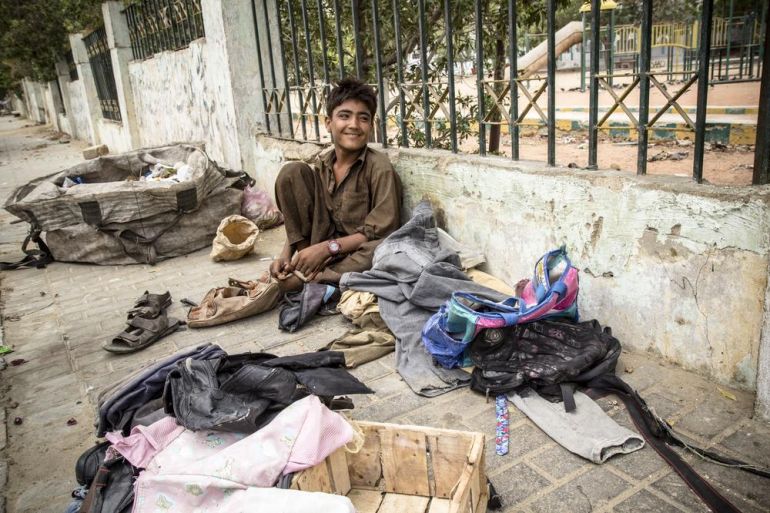
There are two types of street children in Pakistan. Those who start and end their day on the streets while the latter live with their families but are sent to the streets to make money. [Faras Ghani/Al Jazeera]
By Faras Ghani
Published On 20 Aug 201420 Aug 2014

The number of children found living, working and begging on Pakistan’s streets has been growing despite efforts to provide basic education and aid.

An estimated 1.5 million children live on the streets of Pakistan, according to various numbers from government surveys and private organisations.

Rana Asif, who launched the NGO, Initiator, a decade ago to tackle this problem, said that inflation and refugee migration were the main contributing factors.

According to Initiator’s recent survey, 66 percent of street children are runaways who were forced to leave their homes after experiencing violence in household, workplace and educational institutions.

But the runaway children appear to be more vulnerable to abuse than before. The issue was highlighted in December 1999, when serial killer Javed Iqbal sent a letter to a newspaper confessing to the murders of 100 street children in the city of Lahore.

Iqbal committed suicide in prison before he was due to be hanged in front of the parents of the children he had murdered and sexually abused.

There are people such as Asif who want to help, but many others gain financially by keeping the children on the streets.

Asif told Al Jazeera that in cities such as Karachi, mafia exploit the street children by forcing them into begging and stealing.

“We provide some education, training and Eid gifts for these street children but as the mafia sees them stepping away from begging and stealing, the children are swiftly transported to other parts of the country. Some are even smuggled abroad, mostly to Iran,” Asif said.

Advertisement

Follow Faras Ghani on Twitter: @farasG

About 25,000 children daily defy the weather and physical restraints and wander on Karachi's roads to sell tissue papers, clean windscreens or just knock on car windows begging. [Faras Ghani/Al Jazeera]
Advertisement
Street children are vulnerable to sexual abuse on a daily basis. More than 90 percent have been sexually assaulted and the biggest culprits are police officials, according to Asif. [Faras Ghani/Al Jazeera]
Only eight percent of children living on the streets in Pakistan are female. Most of them are picked up when they arrive on the streets and then sold off into prostitution for about Rs 25,000 each ($250). [Faras Ghani/Al Jazeera]
Apart from a huge number of Afghan migrants, about 45 percent of street children in Pakistan are Myanmarese and Bengalis, with those communities having 58 settlements in Karachi alone. [Faras Ghani/Al Jazeera]
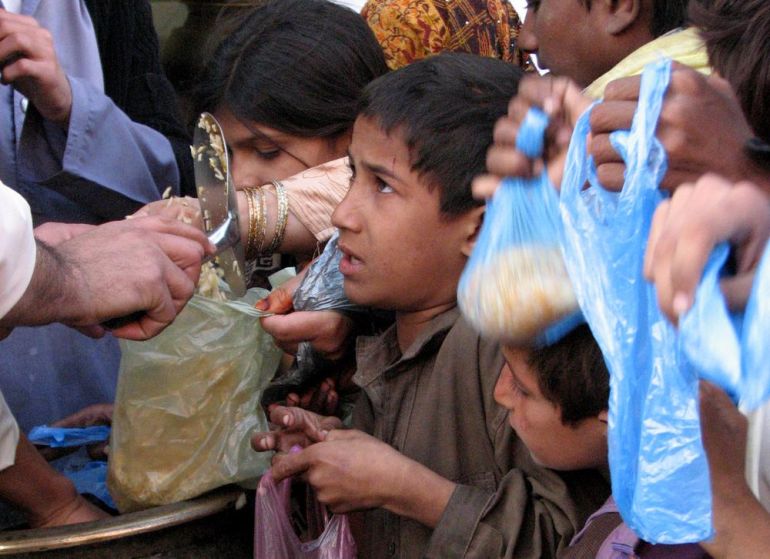
Shrines, where these children visit regularly to fill up their stomachs, are the most popular places for the mafia to recruit them. These locations also act as hotspots for children to acquire cheap drugs and heroin, costing around 20 cents ($0.20). [Faras Ghani/Al Jazeera]
The hustle-bustle of the city life enticed Ali to leave his village home. The video game shops, the sight of "better" food, the availability of cheap drugs and glue-sniffing, made him forget his "plain and stagnant" life at home. [Faras Ghani/Al Jazeera]
Advertisement
There is no law against internal trafficking in Pakistan, Asif said, as children from the north often end up in Pakistan’s metropolises. [Faras Ghani/Al Jazeera]
Despite the hardship, children working and earning a livelihood are content with life. "I’ve learnt how to work and I’m glad I don’t have to resort to begging on the streets or steal copper wire or side-view mirrors," said Asfand. [Faras Ghani/Al Jazeera]


  • About

    • About Us
    • Code of Ethics
    • Terms and Conditions
    • EU/EEA Regulatory Notice
    • Privacy Policy
    • Cookie Policy
    • Cookie Preferences
    • Accessibility Statement
    • Sitemap
    • Work for us
  • Connect

    • Contact Us
    • User Accounts Help
    • Advertise with us
    • Stay Connected
    • Newsletters
    • Channel Finder
    • TV Schedule
    • Podcasts
    • Submit a Tip
    • Paid Partner Content
  • Our Channels

    • Al Jazeera Arabic
    • Al Jazeera English
    • Al Jazeera Investigative Unit
    • Al Jazeera Mubasher
    • Al Jazeera Documentary
    • Al Jazeera Balkans
    • AJ+
  • Our Network

    • Al Jazeera Centre for Studies
    • Al Jazeera Media Institute
    • Learn Arabic
    • Al Jazeera Centre for Public Liberties & Human Rights
    • Al Jazeera Forum
    • Al Jazeera Hotel Partners

Follow Al Jazeera English:

  • facebook
  • twitter
  • youtube
  • instagram-colored-outline
  • rss
Al Jazeera Media Network logo
© 2026 Al Jazeera Media Network