Saudi women take seats in Shura Council
Thirty women sworn in to 150-member advisory body for first time in conservative kingdom’s history.
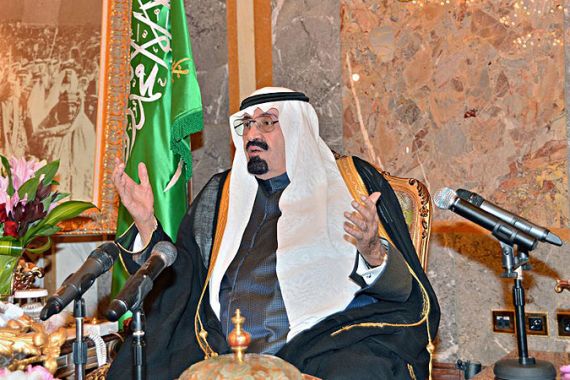
Thirty Saudi women have taken seats in Saudi Arabia’s Shura Council, for the first time in the conservative kingdom’s history, as they were sworn in before King Abdullah at his palace in the capital, Riyadh.
The women took their seats in the same room with their 130 male colleagues and were sworn in collectively, state television said on Tuesday.
“The development we are working at must be gradual,” King Abdullah said in a brief statement broadcast on state television.
He recommended that the council, an advisory body, show “realism” in its discussions and allow “reason to prevail in issues it has to deal” with.
On January 11, the king appointed the women, which include university graduates, human rights activists and two princesses, to the body, also known as the Saudi Consultative Council.
His decree marked a breakthrough in a kingdom that imposes stringent restrictions on women, with females banned from driving and denied the right to travel without the consent of a male guardian.
The monarch took the decisions following consultations with religious leaders in Saudi Arabia, which applies a strict version of Islamic law.
Abdullah has been carefully treading towards change, introducing municipal elections for the first time in 2005.
In 2011, he granted women the right to vote and run as candidates in the next local election, set for 2015, saying “we refuse to marginalise women’s role in Saudi society”.