Iran faces fresh US sanctions
Congress passes new restrictions targeting Iran’s energy and banking sectors.
The bill would effectively deprive foreign banks of access to the US financial system if they do business with key Iranian banks or the Revolutionary Guards.
‘Shut-out’ banks
Such banks would be “shut out of the US financial system,” Howard Berman, the bill’s author in the House of Representatives and foreign affairs committee chairman, said.
| in depth | |||||||||||||||||||||
|
Global suppliers of gasoline to Iran could also be frozen out of the US banking system or prevented from carrying out property transactions and foreign exchange in the United States if they do business with Iran.
“Because of this legislation, we will be posing a choice to companies around the world. Do you want to do business with Iran, or do you want to do business with the United States?” John McCain, a Republican senator, said during the senate debate.
Under current US law, US companies are prohibited from doing business with Iran and foreign companies with big investments in Iran’s energy sector can also be sanctioned, but many US politicians say this has not been enforced.
The Obama administration failed to get US politicians to make blanket exemptions for countries that are “co-operating” with multilateral efforts to isolate Iran.
The legislation only allows the president to waive the new sanctions for such companies on a case-by-case basis, for 12 months.
But even this waiver was too lenient for some House Republicans, who worried Obama will use it.
“The many companies from China and elsewhere, rapidly building Iran’s energy facilities today, will be surely exempted from these sanctions,” Ed Royce, a Republican congressman, said.
UN measures
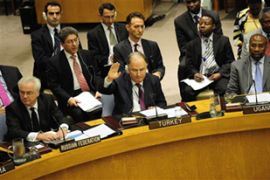
Russia and China, which have strong economic ties with Tehran and have at times resisted sanctions, did support recent UN sanctions, but they fought US efforts to approve tougher measures targeting Iran’s energy sector.
On June 9, the UN security council agreed to a fourth round of economic sanctions against Iran.
The sanctions expanded on an existing arms embargo against Iran and prevent the country from importing technology for certain kinds of ballistic missiles.
They also impose an asset ban and a travel freeze on more than three dozen companies and individuals, including Javad Rahiqi, the head of the Atomic Energy Organisation of the Isfahan Nuclear Technology Centre.
The US has accused Iran of seeking to build nuclear weapons and has demanded it freeze its uranium enrichment activity, which can be a key step towards developing an atomic arsenal.
Iran says its nuclear programme is purely for civilian energy purposes.