Iraq faces ‘more power shortages’
Prime minister says improvement will take at least two years as outages spark protests.
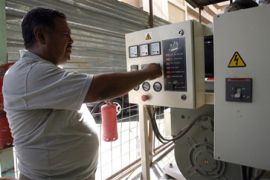
Siemens and GE signed multi-billion-dollar agreements in 2008 to build the plants.
But the Iraqi government has struggled to pay the first instalment of those contracts.
It recently finished selling $2bn worth of bonds which will be used to pay for the power plants.
Al-Maliki also promised to increase the power supply to southern Iraq, where at least one person was killed last week during three days of violent protests.
Protesters criticised
Basra witnessed the largest demonstration: hundreds of people threw stones and empty bottles at the provincial government building.
He criticised the protesters as “rioters”.
“There is a difference between demonstration and unrest. In Basra, it was unrest,” al-Maliki said.
Thousands of people turned out for a peaceful protest in Karbala on Tuesday, and a smaller group demonstrated in the western city of Ramadi.
Al-Maliki also said he would consider a resignation offer from Kareem Waheed, Iraq’s electricity minister. Waheed offered to step down on Monday.
But al-Maliki denied reports that he had demanded Waheed’s resignation, and said the minister remains the best-qualified person to improve Iraq’s electricity production.
“I don’t know anyone in Iraq who is more capable than he is at the technical level,” al-Maliki said.