Pope begins Middle East tour
Pope Benedict arrives in Amman on “pilgrimage” to mend ties with Muslims.
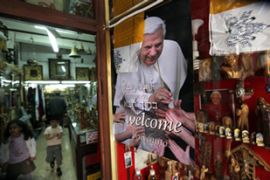
Benedict was to visit Amman’s Regina Pacis centre for the handicapped before a courtesy meeting with the Jordanian royal family.
| In depth |
|
|

He was also expected to tour several Biblical sites, including Mount Nebo, where Moses is said to have seen the Promised Land from a distance, and celebrate mass in Amman, where 30,000 people were expected to attend.
Yousef Al-Sharif, Jordan’s information minister, has welcomed the pope’s visit.
“We are really delighted that he will start pilgrimage from Jordan,” he said.
But Jordan’s Muslim Brotherhood has criticised the pope’s visit following a controversial papal speech in 2006.
‘Insufficient’ apology
The pontiff angered many Muslims when he quoted a medieval text that characterised some of the teachings of the Prophet Muhammad as “evil and inhuman”.
The pope later said he was “deeply sorry” for the reaction his speech caused, and explained that the text did not reflect his own opinions.
But the Brotherhood has called for an apology to the world’s Muslims, saying the pope’s statement of regret was “insufficient”.
Jordan’s opposition Islamic Action Front party has also called on the pope to apologise for the speech, which they said targeted Islam.
“What we want is a change in his policies, so that it is in harmony with the teachings of Jesus about love, peace, justice, equality and condemnations of crimes and Zionist terrorism,” Zaki Bani Rsheid, the head of the party, told the AFP news agency.
But the pope has said he is visiting the Middle East as “a pilgrim of peace” in a region plagued by violence, injustice, mistrust and fear.