Iraqi Sunni bloc ends boycott
Leader of Accordance Front ends action following his release from house arrest.
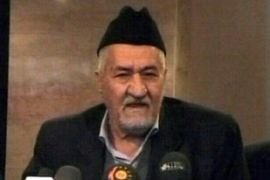
Dulaimi’s daughter Asmaa al-Dulaimi, also a member of parliament, told Reuters news agency her father had agreed to stay at the hotel opposite the parliament building until Thursday.
She said Rubaie had promised to complete an investigation into the affair, which began last week when Iraqi police and soldiers chased suspected gunmen into Dulaimi’s office compound.
They found a car bomb nearby, and US forces said one of Dulaimi’s bodyguards had the key to the vehicle.
Dulaimi’s bloc has criticised the Shia-led government of Nuri al-Maliki, the Iraqi prime minister, and pulled its members out of the cabinet in August, complaining that Sunni Arabs were being marginalised.
About 250 supporters of Dulaimi marched in the mainly Sunni town of Tikrit north of Baghdad, demanding he be released from “house arrest”.
Security
Also on Sunday, US deputy secretary of state, John Negroponte, said Iraq must take advantage of improved security and enact laws aimed at reconciliation or risk a resumption of sectarian violence.
 |
| Negroponte said Iraq can now move forward in the spirit of national conciliation [AP] |
Violence in Iraq has fallen over the past few months, but there has been slow progress in developing legislation aimed at reconciling warring communities.
“The security surge has delivered significant results. Now progress on political reconciliation, including key national legislation as well as economic advances, is needed to consolidate the gains,” Negroponte told a news conference in Baghdad at the end of a six-day tour of Iraq.
“If progress is not made on these fronts we risk falling back toward the more violent habits of the past,” he said.
Reconciliation
Negroponte declined to comment on the Dulaimi affair but said he was optimistic Iraq would achieve political reconciliation.
Sceptics should bear in mind the recent improvements in security, he said.
“I am sure incidents will arise from time to time that will cause people to question whether the national reconciliation process is going forward.
“But on the other hand I would urge those who feel that way to consider the fact that a great deal of progress has already been made in the security area.”