[QODLink]
Middle East
Al-Sadr 'flees Baghdad crackdown'
Iraq to shut borders with Iran and Syria as part of attempt to end the violence.
Last Modified: 14 Feb 2007 08:52 GMT
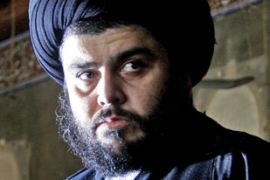
The Pentagon has described al-Sadr's Mahdi Army as the biggest threat to Iraqi security [AFP]
US military officials say they believe Muqtada al-Sadr, the Shia leader who leads the Mahdi Army militia, has fled Iraq in advance of a security crackdown in Baghdad.

US intelligence officials say al-Sadr is in Tehran but a senior aide to the cleric told the AFP news agency on Wednesday that he was "still inside Iraq and working normally".
"It's ridiculous. It's nothing," Nassar al-Rubaie said of the claims.

ABC News network reported that al-Sadr had left Iraq because of fears that he might be targeted in US air strikes and concerns over his safety due to divisions within his organisation.
The Iraqi commander of the operation announced on Tuesday that the country's borders with Syria and Iran will be closed as part of an attempt to end the violence.

Lieutenant-General Abboud Gambar did not say when the borders would be shut, but another official said it was expected within two days and would only partially reopen after the closure.

Curfew extended

Gambar, addressing the nation on behalf of Nuri al-Maliki, the prime minister, also said Baghdad's night-time curfew would be expanded by an hour and permits allowing civilians to carry weapons in public would be suspended during the crackdown, which he suggested could last several weeks.
Gambar said: "Occupants of properties belonging to the displaced have 15 days ... to vacate these properties and return them along with their contents to their rightful owners."

His address suggested that Iraqi authorities plan to exercise wide powers while waging the crackdown.
 
Gambar said he would report to al-Maliki weekly.

A criminal court will hold emergency hearings on cases such as murder, theft, rape, kidnapping, damaging public property and the possession and transfer of arms and ammunition, he said.

The US military announced last week that the security crackdown in the capital had already begun, although Iraqis have seen little evidence of it.
 
"Negative effect"
 
George Bush, the US president, has committed 21,500 more troops to the operation, which is expected to involve a total of 90,000 Iraqi and US soldiers.

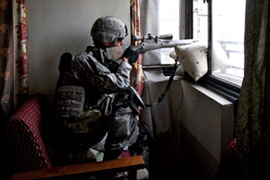
The US military announced last week that the
Baghdad security operation had begun [AFP]
A Pentagon report said the Mahdi Army presented "the greatest negative effect on the security situation" in Iraq.

Al-Maliki has been reluctant to confront the group because al-Sadr's political bloc supports him in government, but he has recently pledged to tackle both Sunni and Shia militias.

The Sadr movement has insisted that it supports the security plan and said that it fighters would disarm once it is successful.
  
"The arms that people got to defend themselves will disappear as soon as the state assures security. We support this plan," al-Rubaie, the al-Sadr aide, said.
Source:
Agencies
Topics in this article
People
Country
City
Organisation
Featured on Al Jazeera
An unflinching portrait of physical labour in the 21st century.
The stark choice between a fascist or an imperialist course in Syria should be discarded for a third and better course.
Israel's propaganda machine carefully chooses its words to assert illegal ownership over Jerusalem and Palestine.
As Western fears grow over Iran's continuing nuclear programme, we ask how a military strike could impact the region.
<  > 
join our mailing list

Enter Zip Code
Go