Iraqi president arrives in Syria
First meeting between Iraqi and Syrian leaders for nearly 25 years.
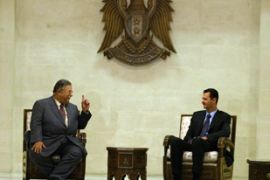
On Friday, an official from Talabani’s office said the Iraqi president and al-Assad are expected to sign a number of agreements related to bilateral security and commercial matters.
| “The enmity between the United States and Syria and Iran doesn’t benefit the situation in Iraq” Mahmoud Othman, Iraqi politician |
When outlining a new strategy for Iraq on Wednesday, Bush vowed military action to disrupt supplies of weapons coming into Iraq from Syria and Iran.
“The timing may seem a little tricky after what Bush said,” Mahmoud Othman, a prominent Iraqi politician with close ties to Talabani, told Associated Press.
| Your Views |
|
“[Bush’s plan] very much puts Iraqis at the centre of responsibility” Condoleezza Rice, US secretary of state |
The visit has been planned for nearly a year and its date was finalised about two weeks ago, he said.
Engaging with Iraq could offer Assad’s government an opportunity to ease its relative isolation in the region.
“Syria can play a constructive role in Iraq, but not necessarily a decisive one,” Rami Khouri, a Beirut-based Middle East expert, told The Associated Press.