France pulls the plug on Minitel
Precursor of services like online banking, travel bookings and even sex chats, it was a decade ahead of World Wide Web.
Published On 30 Jun 2012
France will halt this weekend the Minitel service, a home-grown precursor of internet services like on-line banking, travel reservations and even sex chats.
By its peak in the late 1990s, some 25 million people in France were using Minitel’s 26,000 services, ranging from checking the weather to buying clothes and booking train tickets.
Keep reading
list of 4 itemsHong Kong’s first monkey virus case – what do we know about the B virus?
Why will low birthrate in Europe trigger ‘Staggering social change’?
The Max Planck Society must end its unconditional support for Israel
But its creator, France Telecom, was unable to sell the clunky system overseas.
“With the Minitel, we invented a lot of today’s technology,” said Jean-Paul Maury, former director of the Minitel project at France Telecom.
“A terminal accessing a service located at the end of the world that was born with the Minitel: by that I mean the Internet and all online networks.”
Aficionados are preparing to mourn the passing of the network, ironically enough, on the Internet. On social networking site Facebook, groups have sprung up to prolong its memory, proclaiming: “No to the end of the Minitel”.
Was cutting edge
For many French, the Minitel is a reminder of a time when their country was at the cutting edge of modernity.
Under Socialist President Francois Mitterrand, the France of the 1980s led the world with its bold modern architecture – like the glass pyramid outside Paris’ Louvre museum – its groundbreaking TGV high-speed train, and supersonic Concorde passenger plane.
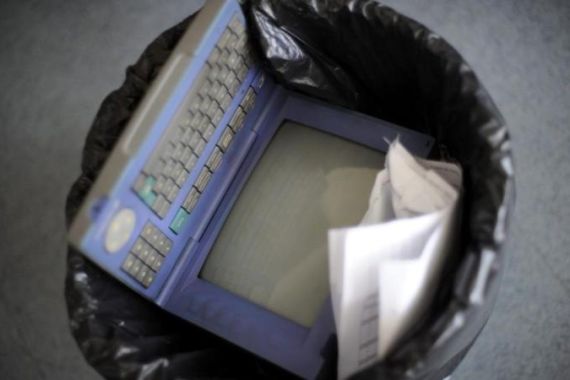
Originally designed by France Telecom as an online directory to save paper, the Minitel was a drab, box-like terminal with a keyboard that used ordinary telephone lines to transmit information.
The technology it used, videotex, was nothing new, Britain already had Ceefax, the US NAPLPS, and Germany was preparing to launch its Bildschirmtext.
Its unique feature was the wealth of services it inspired, accessible via the dial-up code 3615. The most famous of these was “Minitel Rose”, or “pink Minitel”, a plethora of sex chats that encouraged some users to run up astronomical phone bills.
The government played a role in championing the technology, financing the distribution of millions of free terminals to ensure widespread pick-up. But the Minitel never caught on outside the country.
“People were amazed and kept coming to see how it worked. But you had to be able to develop the low-cost terminals and then construct all the services and other countries didn’t want to make the effort,” Maury said.
While the Internet protocol was standardised in 1982, introducing the concept of a world-wide network of computers, it was not until the mid-1990s that restrictions on commercial traffic were lifted.
Since then the rapid growth of Internet services has made Minitel obsolete but many in France still use the plastic boxes.
France Telecom estimates 670,000 terminals are in circulation, mostly used by farmers to exchange information on cattle and by doctors to transmit patient details to the national health service.
Source: News Agencies