Russia declares wildfires emergency
State of emergency declared in seven regions as fires kill 40 and leave hundreds homeless.
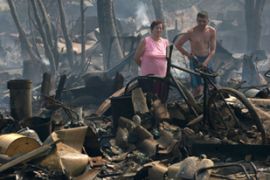
The moves come amid unusual public criticism that the government was slow to react to the spreading fires last week.
“Remember that any tossed away match can lead to an irreparable disaster. That is the way things are,” Medvedev said in a televised address.
“Our main task today is to help the victims return to normal life.”
On Monday, the health ministry said that 40 people had died in the fires, raising the toll from 34.
Hundreds homeless
The worst hit region has been Nizhny Novgorod with 19 deaths, but raging fires have also claimed lives in the Voronezh, Lipetsk, Moscow and Ryazan regions.
According to the regional development ministry, at least 1,875 houses have been destroyed in fires, leaving more than 2,000 people homeless, with around 128,000 hectares of land on fire.
On Monday, Sergei Shoigu, the emergencies minister said that wildfires in the southern Lipetsk region destroyed 50 homes after strong winds sent flames ripping through a village.
A country notorious for its bitterly cold winters, Russia is enduring its severest heatwave for decades which has seen all-time temperature records tumble throughout July.
Forecasters have warned there is no chance of the heatwave relenting for the moment, with temperatures of between 35-42 degrees Celsius expected in Moscow and central Russia over the next few days.