EU leaders meet to defend euro
Brussels meeting discusses budget discipline and economic policy co-ordination.

‘Encourage Spain’
Concern over Spain following Greece’s steps in needing a bailout, have also had its impact on the euro performance in the past few weeks, but EU leaders have confirmed that Spain is on the right reforms path.
| in depth | |||||||||||||||
|
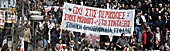
Despite repeated denials, EU leaders have not allayed concern over Spain’s financial fate.
Angela Merkel, the German chancellor, and Jean-Claude Juncker, head of the eurogroup of finance ministers, have sought to highlight Spain’s successful measures that led the country to safety.
“I think you have to look at what Spain has done over recent weeks, taking strong decisions,” Merkel said on arrival in Brussels on Wednesday.
“We should encourage Spain by stressing that it is taking the right road and that by going this way, Spain is contributing towards [global] competitiveness for Europe as a whole.”
The Spanish government earlier in the day adopted labour-market changes, on top of sweeping earlier cuts in its public-spending plans that Merkel particularly highlighted.
Juncker said he had seen no indication “that Spain will be in a position where it has to ask” for the emergency funds.
But less optimistic officials say they are afraid that the crisis was heavier than how it is seen.
“The turmoil in the sovereign debt markets has cast a serious shadow over financial stability in Europe, which could … derail the still nascent recovery of the real economy,” Olli Rehn, the EU Monetary Affairs Commission chief, said.
A decision by Moody’s rating agency to cut Greece’s debt to non-investment grade on Monday served notice of the need for the EU to remain alert over the debt crisis.
Spain, which closely watched bond auction on Thursday, also is a cause for concern although member states say it is not on the agenda of the summit and have denied repeatedly that the country is seeking financial help.
Spain won praise from Merkel on Wednesday for announcing labour reforms to try to boost its competitiveness.
But financial analysts questioned whether its plans, or a pension overhaul announced by France the same day, go far enough.
Talking in one voice
Merkel and Nicolas Sarkozy, the French president, set the tone on Monday by pledging unity to defend the euro.
| special report | ||
|

Sarkozy bowed to German demands for tougher budget rules and accepted euro zone states which persistently breach deficit limits should have their voting rights in the bloc suspended, even if it requires treaty changes.
He also accepted closer “economic government”, or greater economic policy co-ordination, should involve all 27 EU member states and not just the 16 that use the euro, and dropped demands for dedicated euro-zone secretariat.
“More than ever, Germany and France are determined to talk with one voice, to adopt common policies, to give Europe the means to meet its legitimate ambitions,” Sarkozy said.
Long way to go
EU diplomats say differences remain and there is a long way to go to convince the markets and get through the crisis.
Britain, for example, is hostile to important parts of the drive towards closer budget surveillance and says it will not allow its budget plans to be submitted to the EC for review before the national parliament.
David Cameron, the British prime minister, is likely to defend his position strongly at his first EU summit.
For his part, Fredrik Reinfeldt, the Swedish prime minister, ruled out on Wednesday any changes of the EU treaty to strengthen budget discipline, opposing calls for amendments led by Germany to step up sanctions on budget sinners.