EU tightens Iran sanctions
European nations impose further trade restrictions over nuclear programme.
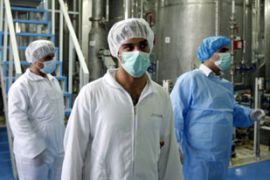
It was not clear if the IAEA mission was directly related to a package of incentives being offered to Tehran if it freezes uranium enrichment, a process Western nations have said could be used to build an atomic weapon.
However, a diplomat close to the IAEA had previously said that Heinonen’s visit was likely to concentrate on clarifying outstanding questions about Iran’s nuclear programme rather than the incentives offer.
New restrictions
The new EU restrictions announced on Friday go slightly beyond existing UN trade sanctions and are designed to deny public loans or export credits to companies trading with Iran.
France, which holds the rotating EU presidency, said European governments would also carefully watch financial groups doing business with Iranian banks and increase checks on ships and aircraft travelling to Iran.
“This resolution expands the range of restrictive measures adopted by the UN security council,” in December 2006 and March 2007, an EU statement said.
Earlier this week, France and the US said Iran’s response to the package of incentives was insufficient.
Iran said on Tuesday that it would only give a clear response to the offer when it gets a direct response on questions it has about the incentives.
Iran insists that as a signatory to the nuclear non-proliferation treaty it has the right to develop nuclear technology which it says is aimed at generating electricity.