Serbians split before election day
Moderates faces challenge from nationalists in first vote since Kosovo’s secession.
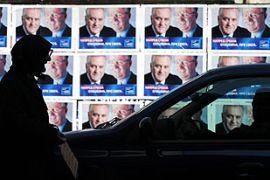
Voting at more than 8,600 polling stations, including 295 in Kosovo, begins at 7am on Sunday and ends 13 hours later.
The first preliminary estimates are expected at around 2000 GMT.
The contenders
Vojislav Kostunica, the Serbian prime minsiter who like the Radicals favours closer ties with Russia, has made the battle to keep Kosovo in Serbia the cornerstone of his re-election bid.
Running on the ticket “For a European Serbia”, Boris Tadic, the Serbian president and leader of his pro-Western Democratic Party, runs a close race with the nationalist Radical Party.
Tight race
Given the tightness of the race, the two main blocs, the pro-Europeans and nationalists, will need to produce a coalition with at least one other smaller party.
Analysts have been busy predicting possible coalitions, mostly coupling the Radicals with Kostunica’s nationalists, or Tadic’s Democrats with those representing minorities.
The creation of a nationalist government is certain to end Belgrade‘s co-operation with the ICTY, thus halting its integration with the European Union and pushing it back into the isolation of the 1990s Milosevic regime.
In a move meant to woo voters disillusioned with the West, the EU signed last week a pre-membership pact with Serbia.
However, this only added to a campaign that was marred by death threats against Tadic.
Kosovo status
The parliamentary and local polls will be held in Kosovo despite opposition from the UN and Kosovo’s ethnic Albanians about the local elections, which they see as an attempt by Serbia to partition the breakaway territory.
Some 40 nations including the US and all but a handful from the EU have recognised Kosovo since its ethnic Albanian-dominated parliament unilaterally declared independence on February 17.
The loss of the southern territory, viewed by most Serbs as the cradle of their history, culture and Orthodox Christian religion, has buoyed support for the nationalists ahead of the elections.