German airports hit by strike
Thousands of public-sector workers walk out in support of 8 per cent wage increase.
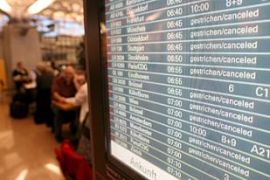
Intercontinental flights were not affected.
Erik Hagens, whose flight to Vienna from Duesseldorf had been cancelled, said: “I have some sympathy for the strikes but I hope that my client does too.”
Staff at Frankfurt airport operator Fraport stopped work early on Wednesday.
Flight cancellations
A Fraport spokesman said that about 100 flights had been cancelled and that there were some delays.
Workers were expected to return to work during the morning but services would probably not be back to normal until Thursday, he said.
Thorsten Polleit, an economist at Barclays Capital in Frankfurt, said the latest strikes illustrated how German workers had abandoned the wage restraint seen in recent years and wanted higher wages to offset stronger inflation.
“Unions and employers are pencilling higher inflation compensation into the latest wage rounds,” he said.
‘Mega wage year’
Polleit said that there was broad public support for higher wage demands and ECB policymakers were right to be concerned.
Labelled a “mega wage year” by one of Germany’s leading unions, 2008 has already seen a 5.2 per cent pay rise for steel workers, their biggest in 16 years.
Frank Bsirske, the head of Verdi, said on Wednesday that a current offer of a staggered four per cent wage increase did not even compensate for inflation.
He said it also included a proposal to lengthen the working week to 40 hours which was out of the question.
Compromise
“People won’t accept it and I very much hope that employers will understand that, take it on board and realise they have to compromise,” Bsirske said.
A separate strike on Wednesday by Berlin transport workers brought subway, tram and bus services to a halt and combined with snow flurries to cause rush hour misery for thousands.
Meanwhile, the GDL train drivers’ union has threatened strikes on passenger and freight services from next week, escalating a months-long disagreement with rail operator Deutsche Bahn.