Georgia parties demand run-off vote
Opposition leaders plan fresh protests against President Saakashvili’s election win.
Published On 9 Jan 2008
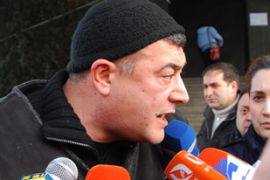
“We are beginning a hunger strike in connection with the falsification of the election and the fact that we are not being given direct air time,” Gachechiladze said to a crowd of about 100 activists in Tbilisi.
He called for mass opposition protests and threatened to bring “the whole of Georgia down”.
Mixed assessment
International elections monitors gave a mixed assessment of the vote, saying it was a significant achievement for democracy but noting an array of violations.
Opposition members claim Gachechiladze was deprived of more than 100,000 votes cast in his favour.
Gachechiladze reportedly burst into the office of Levan Tarkhnishvili, chairman of the Central Election Commission (CEC), and demanded his resignation.
On Tuesday, Gachechiladze and other opposition leaders discussed their complaints with representatives of the Organisation of Security and Cooperation in Europe (OSCE), the international body that monitored the vote.
Run-off demand
Giorgy Khaindrava, another opposition leader, also demanded a run-off, which under election law must be held if no candidate receives more than 50 per cent of the vote.
“We will all take to the streets and let Saakashvili arrest us all, but he won’t have enough prisons; he will have to build new prisons,” Khaindrava said.
The US said the vote was Georgia’s first genuinely competitive presidential election but acknowledged that the monitors “identified significant problems that must be corrected”.
Russia, which vies for influence in Georgia, called the election campaign “hardly free or fair”.
Source: News Agencies