Portugal ‘confident’ over EU treaty
Portugal confident about European treaty despite Poland’s reservations.
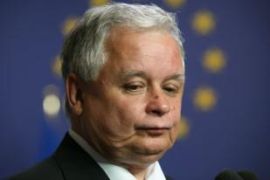
But Poland, which had threatened to veto the Brussels accord, is again asking for clarification.
Minority votes
Jaroslaw Kaczynski, the Polish prime minister, said that the Brussels summit had agreed a mechanism that would allow countries to block contested decisions for up to two years if it had sufficient minority votes.
The text adopted in Brussels talked only of “a reasonable delay.”
Socrates said that the issue would be “quickly overcome.” Portuguese officials said privately however that a solution with Poland could still drag on.
That could mean the treaty may not be sealed before the next EU summit, which will be held in Lisbon in October.
An inter-governmental conference that will draw up the treaty is to start work on July 23. Portugal will submit a draft treaty to the conference.
Ratification
Luis Amado, Portugal’s foreign minister, said: “If there are problems of interpretation on what is written in the mandate, there will have to be a new political discussion.”
These talks would take place at an EU foreign ministers’ meeting in the Portuguese city of Porto in September.
Amado said: “That is when we will see if there are clouds on the horizon.”
Because of the doubts, Portugal has not planned a time or place for an official signing of the treaty – which would launch its ratification by individual countries.