EU leaders still divided on future
Summit fails to resolve issues including Turkey and a European constitution.
Published On 16 Dec 2006
A reference to dropping national vetoes on police and judicial cooperation as envisaged by the constitution was omitted from the draft final statement at the insistence of Britain, Poland and the Czech Republic.
That was a sign of the problems Germany will face in the EU chair from next month in order to revive efforts to reform the bloc’s creaking institutions, which most members see as a precondition for any further enlargement.
Matti Vanhanen, the Finnish prime minister and outgoing presidency holder, told reporters that the leaders agreed on the need to reform the EU’s governing treaty and could not simply tear up the constitution text and start again from scratch.
Meeting on Thursday, the EU leaders toughened their tone on future enlargement, insisting that aspiring members fully adhere to entry criteria and tackle difficult justice reforms and the fight against corruption earlier in the accession process.
New hurdles
They endorsed a decision by foreign ministers this week to suspend a big chunk of Turkey’s entry negotiations to sanction its failure to open its ports to traffic from Cyprus.
While they stopped short of setting new hurdles to future expansion and reaffirmed backing for the eventual EU membership of Turkey and the western Balkan states – Albania, Bosnia, Croatia, Macedonia, Montenegro and Serbia – the new mood amounted to a slowing of the enlargement process.
“The acceding countries must be ready and able to fully assume the obligations of Union membership and the Union must be able to function effectively and to develop,” EU leaders will say according to a draft of the summit conclusions.
Despite the summit affirmations, prospects for further enlargement are by no means certain given a public backlash in western Europe that followed the 2004 admission of 10 mostly ex-communist central and east European countries and disagreement over institutional reform.
‘Privileged partnership’
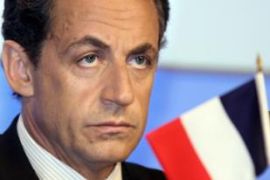
Nicolas Sarkozy, the French interior minister, hinted on Thursday that he could block all negotiations with Turkey if elected next May. After a meeting of EU conservative leaders, he said: “I’m happy to see that these ideas are gaining ground.”
A German participant said Sarkozy had told them privately that if elected he would have an obligation to the French people – an apparent hint at a veto – and urged them to start working on an alternative “privileged partnership” with Ankara.
Britain, a strong backer of Turkey which sees it as a strategic link to the Muslim world, insisted that there should be no watering down of the EU’s commitment to negotiate membership.
Margaret Beckett, the British foreign secretary, said: “I think that on balance people recognise that one can’t just undo whats has been done and been agreed because otherwise we would never make any progress on anything.”
Jean-Claude Juncker, Luxembourg’s prime minister, said that while he backed candidacies of the Western Balkans states, further enlargement without EU institutional reform was not possible after the entry of first of these, Croatia.
While some leaders argued that there was an automatic link between enlargement and institutional change, Beckett said “it is not Britain’s point of view”.
Lech Kaczynski, the Polish president, meanwhile argued that if the countries of the Western Balkans had membership prospects, “so should Ukraine, Georgia and Moldova”.
Source: News Agencies