Bangladesh workers riot over wages
Garment workers clash with police in capital Dhaka, angered by “inadequate” pay hike.
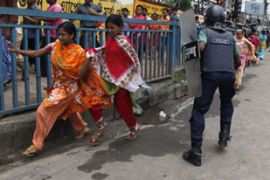
Hundreds of riot police have been deployed, he said, adding that officers had used baton charges and tear gas to try to disperse the crowds.
Mosherafa Mishu, the head of the Garment Workers Unity Forum, which has rejected the proposed wage hike, said that “the workers’ emotion is running very high”.
Below poverty line
“The government has just done what the garment factory owners want. This offer is not acceptable to workers,” Mishu said.
“They are frustrated, they feel let down by the government. They thought they would get a good salary and then are just offered nothing,” she added.
|
“They thought they would get a good salary and then are just offered nothing” Mosherafa Mishu, head of the Garment Workers Unity Forum |
Mishu warned that unless a better offer was forthcoming, workers would strike and organise “a militant movement” over poor pay and working conditions.
The garment industry is Bangladesh’s biggest export market, accounting for more than 80 per cent of the impoverished country’s annual export earnings of $16bn, but workers earn wages well below the poverty line.
Manufacturers say that their profits are being squeezed as shoppers seek a bargain amid the global economic downturn.
“We are rejecting what has been offered as increased wages because it is too inadequate to make ends meet,” said one worker at a protest.
The sector is the second biggest employer in the country, with about 4,500 factories employing about 3.5 million workers, many of whom work in dangerous conditions.
Last week, Sheikh Hasina Wajed, the country’s prime minister told parliament that garment workers’ salaries were “inhuman” and said manufacturers should share profits with the workers.