Scores dead in India stampede
At least 63 people killed after the gate of a temple collapses in Uttar Pradesh.
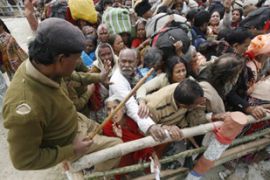
Mass panic
“We have now counted all the bodies and they include 37 children and 26 women who had come to collect free gifts,” SP Pathak, a police official, told the AFP news agency.
|
“The toll is likely to rise further as many women and children are seriously injured” Police official |
Devotees had gathered for a ceremonial feast and free distribution of clothes.
“The toll is likely to rise further as many women and children are injured. At least 20 are serious,” one police officer told the Reuters news agency.
Stampedes at religious events in India are common as large numbers of excited worshippers pack into congested areas.
Panic can spread quickly and, with few safety regulations in place, the result
is often lethal.
Al Jazeera’s Prerna Suri, reporting from Delhi, said: “Official sources have confirmed to us that over 200 people are injured, many of the bodies have been recovered but rescue operations are still under way for those injured.
“It is also being reported that more than 30 people are still trapped beneath the debris,” she said.
In 2008, nearly 300 people were killed in stampedes and scores injured in two different Hindu temples in Rajasthanand Himachal Pradesh states.
Pilgrimages and festivals are a part of daily life in India and the vast majority of Indians, across the entire social spectrum, will participate regularly.
In most cases, crowd management measures are rudimentary, or even non-existent, and police action has often been blamed for exacerbating panic when things go wrong.