Sri Lanka ends truce with Tigers
Cabinet approves pullout from Norway-brokered ceasefire after latest bombing.
Sinnappu Maharasinggam, chairman of the Tamil Action Committee, told Al Jazeera that the government abandoned the ceasefire in order to continue the conflict.
He said: “Once the agreement is removed, and they are no longer bound by international community, they have free rein to kill, particularly more opposition figures and those against government policies.
“Countries following the fighting should be very concerned about this development.”
The director of the National hospital in Colombo said 20 people were admitted to hospital with blast wounds.
Four people were killed, including two soldiers, he said.
Long-running conflict
The Sri Lankan military has claimed to have killed hundreds of Tamil Tiger fighters in recent months.
But analysts say both sides often exaggerate enemy losses and play down their own.
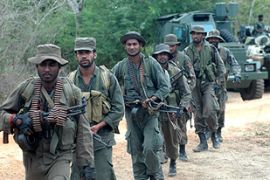
The government of Mahinda Rajapaksa, the Sri Lankan president, has vowed to destroy the Tigers’ military assets and to clear the group from territory it controls in the island’s north.
The army captured the Tigers’ eastern strongholds earlier this year.
Military analysts say there is no end in sight to the conflict. At least 70,000 people have died since 1983 in the separatist struggle.