Japan PM marks Hiroshima with nuclear pledge
Naoto Kan says country should aim to end dependence on atomic power, as Fukushima crisis prompts anti-nuclear rallies.

Published On 6 Aug 2011
Japan’s Prime Minister Naoto Kan has renewed his pledge to work towards a nuclear-free Japan as Hiroshima marked the 66th anniversary of the US atomic bombing.
Speaking at a ceremony on Saturday, devoted to the victims of the bomb that killed more than 100,000 people, Kan said the meltdowns at the Fukushima plant after a March earthquake had convinced him Japan should aim to end its dependence on nuclear power.
| In Depth | |
|
“The large-scale, long-running nuclear accident has triggered radiation leakage, causing serious concerns not only in Japan but also in the world,” Kan said.
Keep reading
list of 4 itemsAfter the Hurricane
World’s coral reefs face global bleaching crisis
Why is Germany maintaining economic ties with China?
“I will reduce Japan’s reliance on nuclear power, aiming at creating a society that will not rely on atomic power generation.”
A city official said that about 50,000 people participated in the ceremony commemorating the detonation of the world’s first atomic bomb in August 1945.
Representatives of more than 60 countries, including the US, were attending.
Anti-nuclear protests
Al Jazeera’s Aela Callan, reporting from Hiroshima, said the disaster had renewed calls in the city to rid the world of atomic weapons and nuclear power.
“All day, protests have been going on here”, she said. “People have loudly been protesting against nuclear power.”
But she said Kan would still face considerable opposition to his vision of a nuclear-free Japan.
“The country really relies a lot on nuclear power. There is a strong nuclear lobby here,” she said.
“Two thirds of Japan’s power plants remain closed after the disaster at Fukushima and there are growing calls to have those restarted because of power shortages which are currently causing the country quite a lot of problems.”
Public support
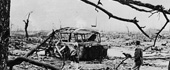
The atomic bomb, which destroyed most of the buildings within 2km of the hypocentre, released a mix of shock waves, heat rays and radiation.
The death toll by the end of 1945 was estimated at about 140,000 out of the 400,000 people who were in the city at the time.
More than 70,000 people perished as a result of another US atomic attack on the port of Nagasaki three days later.
Even many anti-nuclear groups have been careful not to draw parallels between what happened in Hiroshima and Nagasaki and the dangers posed by the peacetime use of nuclear reactors.
But since the March earthquake and tsunami knocked out power at the Fukushima plant, triggering radiation leaks and contamination fears, there has been a shift in public sentiment.
“We hadn’t thought so deeply about it until now. But I think it [nuclear energy] is not so different from the atomic bomb,” Michiko Kato, a 73-year-old survivor who lost her sister to the bomb, said.
“There is nothing made by human beings that is perfect … I don’t want to use anything like this.”
Recent polls showed about 70 per cent of voters sided with Kan’s vision of nuclear-free Japan, and local communities are wary of restarting reactors shut down for regular maintenance and inspection, despite fears of power shortages.
Source: Al Jazeera, News Agencies