Banking reforms pass US Senate
Senate approves sweeping Wall Street reform bill, tightening regulation of banks.
|
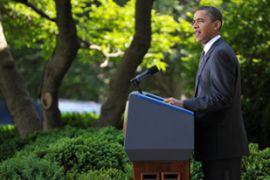
“Over the last year, the financial industry has repeatedly tried to end this reform with hordes of lobbyists and millions of dollars in ads” Barack Obama, |
Obama has said the final version of the bill will hold financial firms accountable but not stifle the free market.
“Over the last year, the financial industry has repeatedly tried to end this reform with hordes of lobbyists and millions of dollars in ads, and when they couldn’t kill it they tried to water it down,” the US president told reporters earlier on Thursday after the bill cleared a key 60-vote hurdle in the Senate.
“Today, I think it’s fair to say these efforts have failed.”
However he warned that there was still some work to do, ironing out the differences between the two bills approved by the House and Senate.
“There’s no doubt that during that time the financial industry and their lobbyists will keep on fighting,” Obama said.
Meltdown
The sweeping reforms cover virtually all aspects of the banking and finance industry, touching Wall Street CEOs and first-time home buyers, high-flying traders and small town lenders.
The legislation is aimed at preventing a recurrence of the near-meltdown of big Wall Street investment banks and the tax payer-funded bailouts that ran into tens of billions of dollars.
The reforms call for new ways to watch for risks in the financial system and make it easier to liquidate large failing financial firms.
They also write new rules for complex securities trades blamed for helping precipitate the recent economic crisis, and it creates a new consumer protection agency.
In addition they would impose new restraints on the largest, most interconnected banks and demand proof that borrowers could pay for the simplest of mortgages.
“Our goal is not to punish the banks but to protect the larger economy and the American people from the kind of upheavals that we’ve seen in the past few years,” Obama said.