US refuses to rule on waterboarding
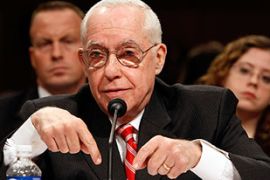
Attorney-general will not rule on legality of interrogation technique.
Published On 31 Jan 2008
| Your Views |
The CIA used the practice soon after it launched its terrorism interrogation programme following the September 11, 2001 attacks.
The technique has been prohibited by the US military.
Mukasey’s comments irritated senators, and prompted Edward Kennedy, a Massachusetts Democrat, to ask: “Would waterboarding be torture if it was done to you?”
“I would feel that it was,” Mukasey replied.
CIA tapes probe
The US House Intelligence Committee is investigating the CIA’s destruction of videotapes that are reported to have shown the use of the interrogation technique on suspects.
| What is waterboarding? |
|
Detainee is strapped to a board and water is poured over face covered with cloth or cellophane
Sensation is akin to drowning, with reflexive choking, gagging and feelings of suffocation
Variations include dunking detainee headfirst into water |
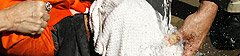
Waterboarding involves pouring water over subjects who are bound, gagged and hooded in order to terrify them by stimulating the feeling that they are drowning.
Patrick Leahy, the committee’s chairman, had opened Wednesday’s hearing with strong words for Mukasey.
“Torture and illegality have no place in America,” he told the former judge.
“Waterboarding has been recognised as torture for the last 500 years,” Leahy said.
“We prosecuted Japanese soldiers for waterboarding Americans during World War Two.”
The US senate narrowly voted in November to confirm Mukasey as Alberto Gonzales’s replacement as attorney-general.
Many voted “no” largely because of Mukasey’s refusal to say if waterboarding is torture.
Mukasey had promised during his confirmation hearing that he would review the legality of interrogation techniques used by the CIA if he became attorney-general.
Source: News Agencies