Chavez set to rule by decree
Chavez will be given special powers for 18 months.
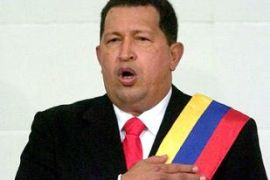
Chavez’s supporters deny the law constitutes an abuse of power and argue radical steps are necessary to accelerate the creation of a more egalitarian society.
Others say the enabling law is dangerously concentrating power in the hands of single man.
The goal
Chavez, who is beginning a fresh six-year term, says the legislation will be the start of a new era of “maximum revolution” during which he will consolidate Venezuela‘s transformation into a socialist society. His critics, however, are calling it a radical lurch towards authoritarianism by a leader with unchecked power.
The former paratroop commander has already said he will use the law to decree nationalisations of Venezuela‘s largest telecommunications company and the electricity sector, slap new taxes on the rich and impose greater state control over the oil and natural gas industries.
A final draft of the law shows Chavez will also be allowed to dictate unspecified measures to transform state institutions; reform banking, tax, insurance and financial regulations; decide on security and defence matters such as gun regulations and military organisation; and “adapt” legislation to ensure “the equal distribution of wealth” as part of a new “social and economic model”.
Chavez also plans to reorganise regional territories and carry out reforms aimed at bringing “power to the people” through thousands of newly formed Communal Councils, in which Venezuelans will have a say on spending an increasing flow of state money on neighbourhood projects from public housing to road repaving.
Previous attempts
Chavez has requested special powers twice before.
In 1999, shortly after he was first elected, he was only able to push through two new taxes and a revision of the income tax law after facing fierce opposition in congress.
In 2001, by invoking an “enabling law” for the second time, he decreed 49 laws including controversial agrarian reform measures and a law that sharply raised taxes on foreign oil companies operating in Venezuela.
This time, the law will give Chavez a free hand to bring under state control some oil and natural gas projects that are still run by private companies, the latest in a series of nationalist energy policies in Venezuela, a top oil supplier to the US and home to South America’s largest gas reserves.