Unicef calls for female empowerment
A report says ending gender descrimination will benefit the world’s children.
Published On 11 Dec 2006
She said that gender equality and the well-being of children went “hand-in-hand”.
Birth histories and census data in China and India continue to show an unusually high proportion of male births and male children under five.
It is estimated that each year roughly one woman every minute dies as a result of pregnancy complications and childbirth.
More than 90 per cent of those occur in Africa and Asia and one out of every 16 sub-Saharan African women will die as a result of pregnancy or childbirth.
By contrast, only one out of every 4,000 women dies of similar causes in industrialised countries.
Women are also at greater risk of contracting HIV than men.
By 2005, nearly half of the 39 million people living with HIV were women and in parts of Africa and the Caribbean, women between the ages of 15 and 24 are up to six times more likely to be infected than young men.
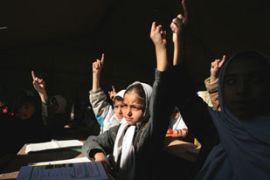
Gender discrimination is also clear in the educational sphere.
Nearly one in every five girls who enrolls in primary school in developing countries does not complete primary education and Unicef estimates that only 43 per cent of girls in the developing world go on to attend secondary school.
The report shows that many believe men have more right to work than women and that they make better political leaders.
The report’s release ties in with Unicef’s 60th anniversary.
Source: Al Jazeera