Zimbabwe ‘Egypt video’ sentencing delayed
Court delays sentencing of six convicted of “conspiring to commit public violence” for watching videos of uprising.
 |
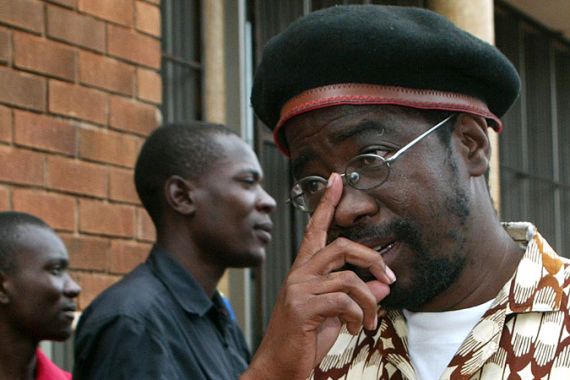
| A Harare judge said the “manner and motive” of Munyaradzi Gwisai and five others showed bad intent [AFP] |
A Harare court has adjourned sentencing on a former opposition legislator and five other civic activists convicted for “conspiring to commit public violence”.
The sentence, due to be handed down on Wednesday, comes after magistrate Kudawashe Jarabini ruled on Monday that former legislator Munyaradzi Gwisai and five others were guilty of conspiring to commit public violence during a meeting in which they watched video footage of mass uprisings in Egypt that toppled its longtime ruler.
|
“[The verdict] won’t intimidate us. It will not deter us. I have no regrets“ – Munyaradzi Gwisai, former legislator |
Jarabini said that watching a video was not a crime, but the “manner and motive” of the February 2011 meeting showed bad intent.
“It is an affront to common sense to say the meeting was innocent and academic,” he said.
Showing footage of uprisings in both Tunisia and Egypt that included “nasty scenarios” was intended to arouse hostility toward Zimbabwe’s government, Jarabini said.
The group was arrested last year for holding the meeting they say was an academic lecture on democratic rights. They face a fine or maximum prison sentence of up to 10 years.
Original charges of treason carrying a possible death sentence were dropped in months of legal wrangling.
‘Unsubstantiated allegations’
In freeing the six on bail last year, a High Court judge described the case against them as weak and based on the evidence of one witness present at the meeting seen to have been an undercover police informer.
The court described police claims that the group planned to emulate the Egyptian revolt as “bold and unsubstantiated allegations”.
Gwisai, an outspoken leader of an international socialist organisation in Zimbabwe, told reporters he was not surprised by the verdict.
“It won’t intimidate us. It will not deter us. I have no regrets. It’s a staple of what’s happening in Africa,” he said.
Gwisai and other members of the group complained at an earlier court hearing they were tortured by police and beaten with wooden planks and iron bars.
They said they were also told to confess that they called for the ouster of longtime Zimbabwe ruler President Robert Mugabe, 88.
Mugabe has been in power since independence in 1980.
Critics accuse him of violently suppressing his opponents and destroying the country’s economy.