Profile: Alassane Ouattara
Internationally recognised winner of presidential poll has repeatedly been thwarted in attempts to lead Cote d’Ivoire.
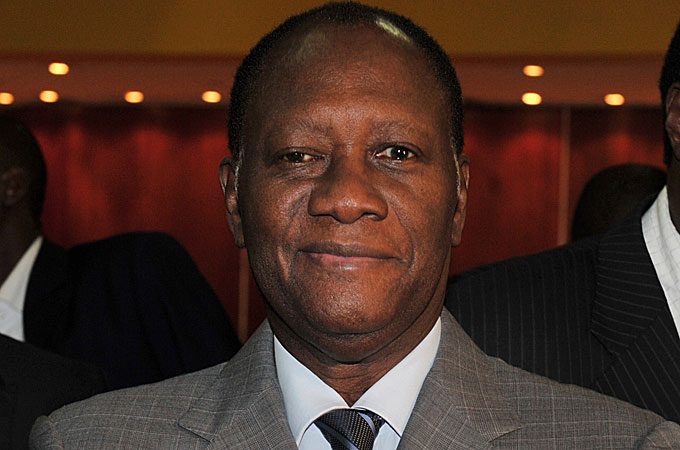 |
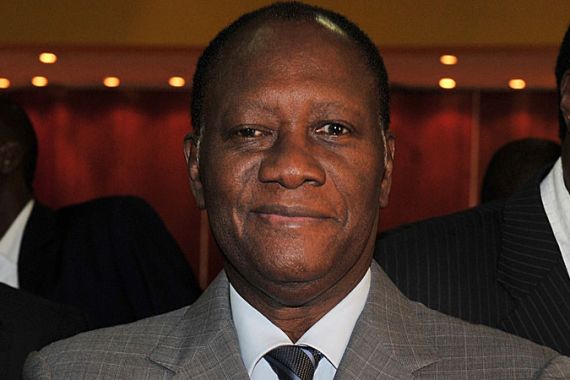
| Ouattara began his political career after being tasked with helping economic recovery in Cote d’Ivoire in 1990 [AFP] |
Alassane Ouattara, the man recognised by the international community as the winner of Cote d’Ivoire’s presidential poll, has continuously been thwarted in his attempts to lead the west African nation.
The 69-year-old began his career in economics, working at the International Monetary Fund in Washington, while also gaining a masters and doctorate in the field from the University of Pennsylvania in the United States.
At the IMF he worked as African Director and as vice-governor, and governor, of the regional Central Bank of West African State, until being urged by Felix Houphouet-Boigny, Cote d’Ivoire’s independence leader, to save the country from economic stagnation.
In 1990 Ouattara was appointed the chairman of an economic stabilisation programme, and then later in the year as prime minister, serving under Houphouet-Boigny.
When the president died in 1993, Ouattara made a push for the job, running in elections in 1995 and 2000 as the nominee of the Rally of the Republicans opposition party.
But the new politician, who was viewed as a technocrat and too Western by critics, was disqualified both times because of a ruling that presidential candidates could not have a foreign parent. A court in 1995 had ruled that Ouattara’s mother was from Burkina Faso, a claim he has denied.
However in 2002, following the country’s civil war, that ruling was amended, paving the way for Ouattara, who had been working as deputy managing director of the IMF, to return to politics.
In November 2010 Outtara ran against Laurent Gbagbo, a Christian from the country’s south, in the country’s presidential elections. Preliminary results showed that he won, but Gbagbo’s party contested them, leading to political stalemate.
Despite the backing of the United Nations and the international community, Ouattara has been left to run an alternative government from the Golf Hotel, a luxurious building in Abidjan, Cote d’Ivoire’s largest city and former capital.
Forces loyal to Ouattara have been fighting to remove Gbagbo, who was sworn in as president last December by the constitutional council. More than 1,500 people have been killed in the violence so far.