Sudan opposition promised key posts
Ruling party offers key positions to opposition after polls to build consensus.
The ruling party headed by Omar al-Bashir, the incumbent president, hopes that the elections would help to bring the oil-producing country back to democracy two decades after a military-led coup.
Opposition boycott
However, the credibility of the elections has taken a beating with main opposition parties partially boycotting the elections, accusing al-Bashir of widespread rigging.
The elections were set up under a 2005 peace accord that ended more than two decades of north-south civil war and also promised a referendum on whether the south should secede in January 2011.
The decision by south Sudan’s dominant Sudan People’s Liberation Movement (SPLM) to boycott the vote and most polls in northern Sudan has raised fears of unrest in the build up to next year’s referendum.
| special report |
 |
No one from the SPLM or other boycotting groups, including the opposition Umma party, was immediately available to comment on Salaheddin’s offer.
The polls that started on Sunday were initially scheduled to run for three days.
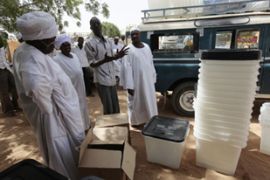
Logistic problems, however, have forced Sudanese election officials to extend the voting for two more days.
In a statement on Tuesday, Sudan’s National Elections Commission (NEC) said polls would be extended to Thursday due to delay in ballots delivery.
“The decision is based on the results of the first day and to enable all the electors to vote and to compensate the lost time due to errors and obstacles of the first day,” the NEC said.